Parking Lot Striping Company: How To Choose The Right One
Your parking lot communicates a lot about your business before customers even step inside. Faded lines and unclear traffic flow create confusion, safety hazards, and potential liability issues that no property manager wants to deal with. Finding the right parking lot striping company makes the difference between a professional first impression and an accident waiting to happen.
With over 40 years serving Denver commercial properties, Denver Snow & Commercial Property Services knows that striping isn’t just paint on pavement, it’s about protecting your business and meeting ADA accessibility requirements. The wrong contractor can leave you with fading lines within months or markings that don’t comply with local codes.
This guide covers what to look for when hiring a striping contractor, from equipment quality and material choices to pricing structures and warranties. Whether you manage a hospital parking structure, retail complex, or office building, you’ll learn exactly how to evaluate candidates and select a company that delivers lasting results.
What a parking lot striping company should handle
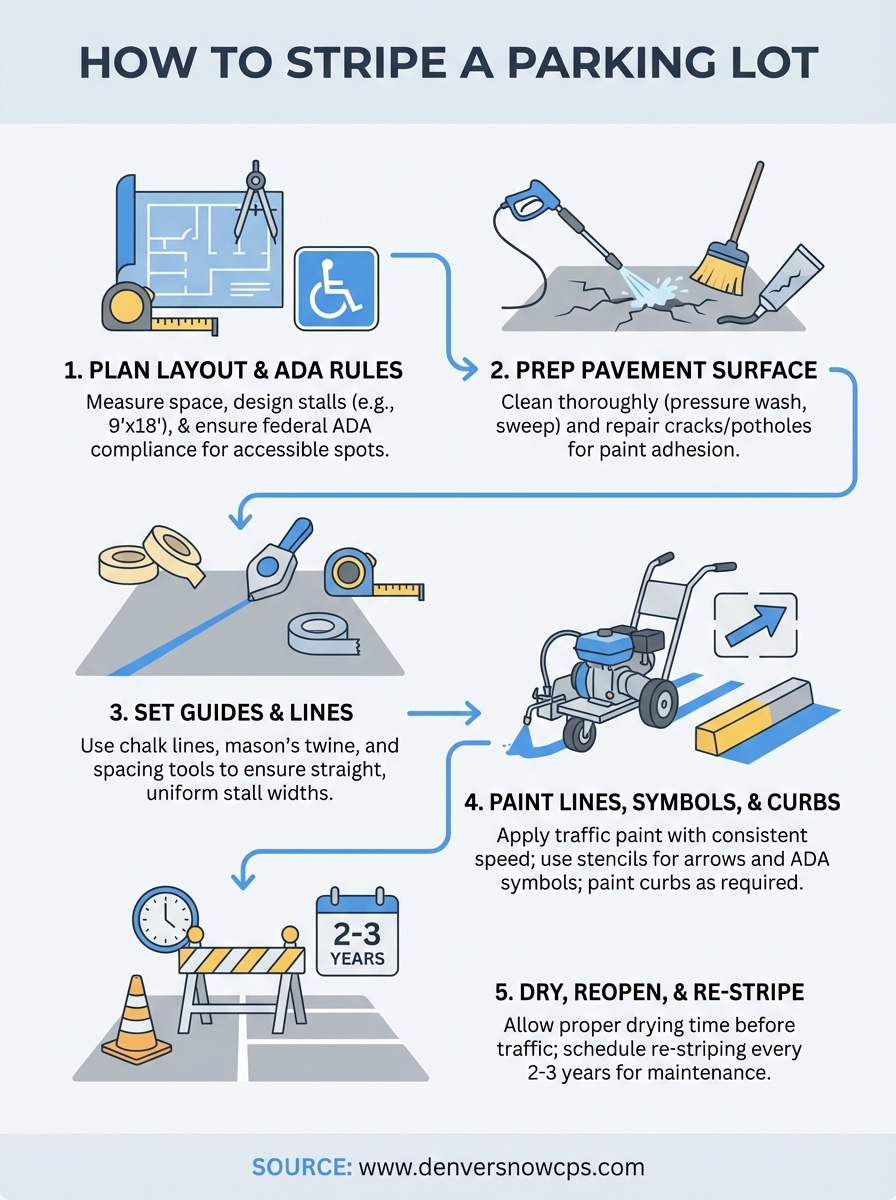
A professional parking lot striping company takes responsibility for far more than applying paint to asphalt. Your contractor needs to handle surface preparation, layout planning, and compliance verification before any striping equipment touches your pavement. Companies that skip these steps deliver substandard results that fade quickly or fail inspection.
The best striping contractors view every project as a complete system that includes traffic flow analysis, ADA compliance checks, and long-term maintenance planning.
Core surface preparation and assessment
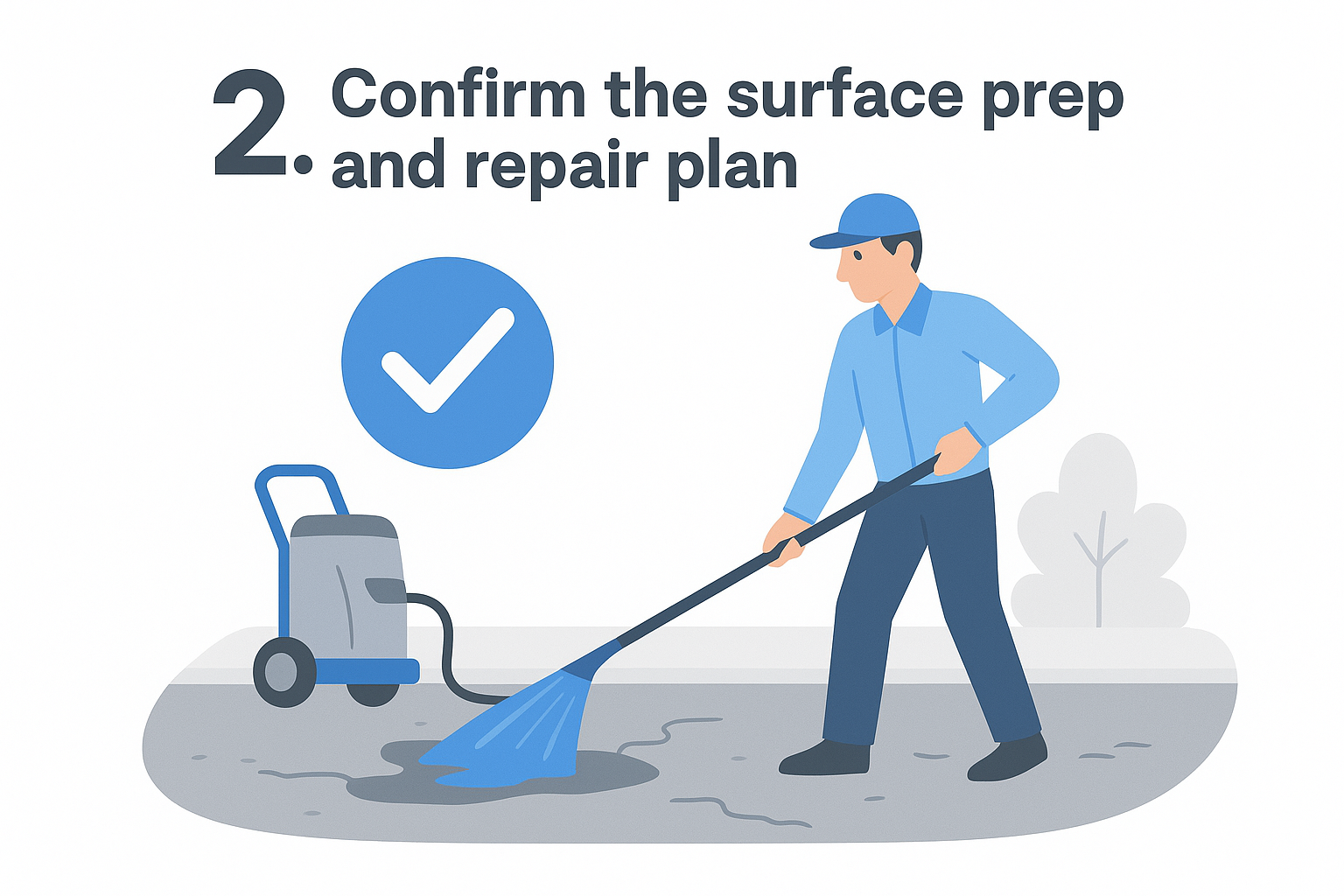
Your striping company should start with a thorough surface inspection that identifies cracks, oil stains, and drainage issues before work begins. They need to pressure wash the entire area and fill significant cracks that would cause striping failure. Surface preparation accounts for roughly 40% of project longevity, yet many contractors rush this phase to maximize profit margins.
Qualified contractors bring thermal imaging equipment to detect moisture problems beneath the surface and evaluate whether your pavement can accept new markings. They also test adhesion levels on older surfaces to determine if additional primers or sealants are necessary before striping application.
Layout verification and regulatory compliance
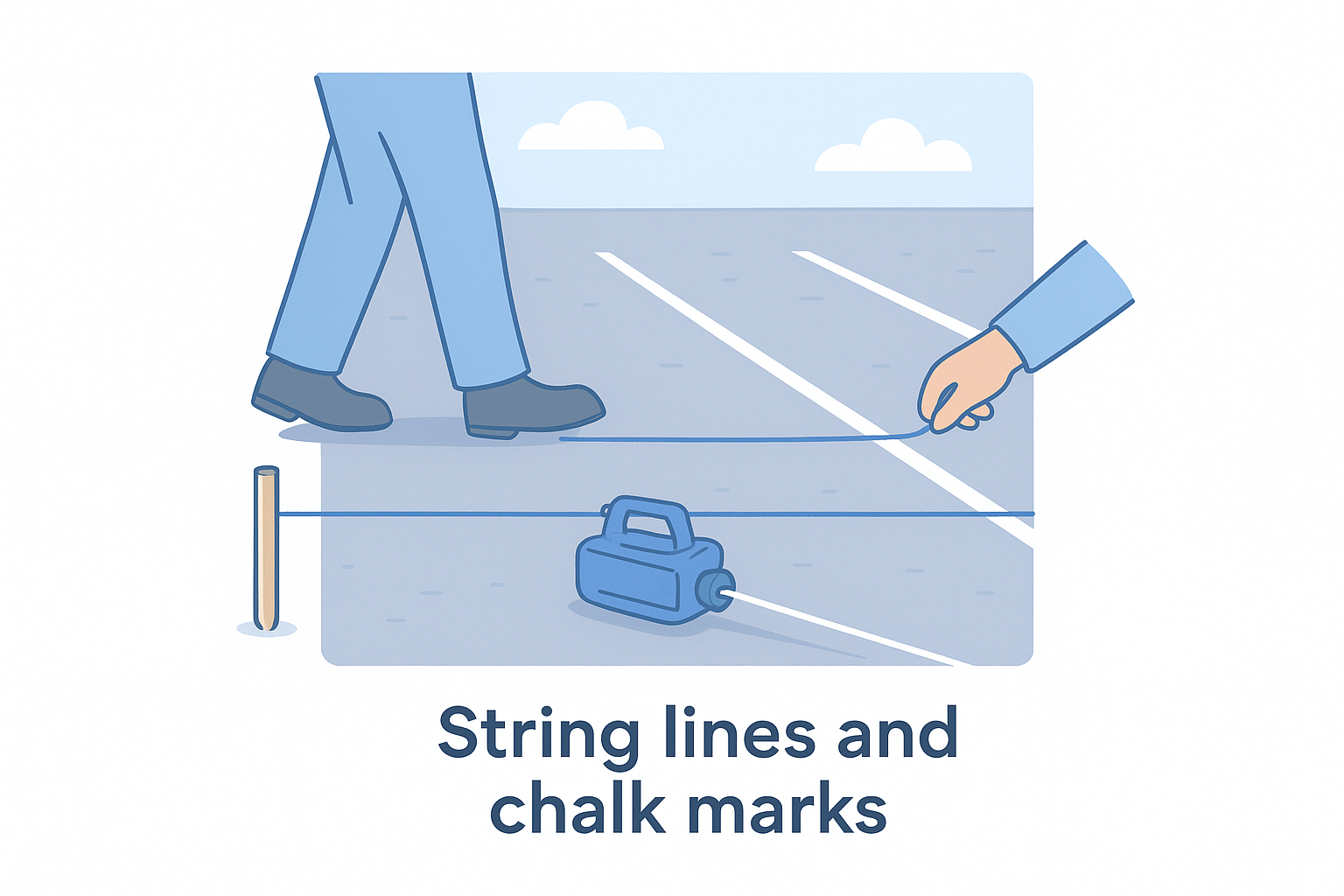
Professional striping teams measure and mark your entire layout according to local fire codes, ADA requirements, and optimal traffic patterns for your specific property type. They should provide you with detailed layout drawings that show parking angles, fire lanes, handicap spaces, and loading zones before applying any paint.
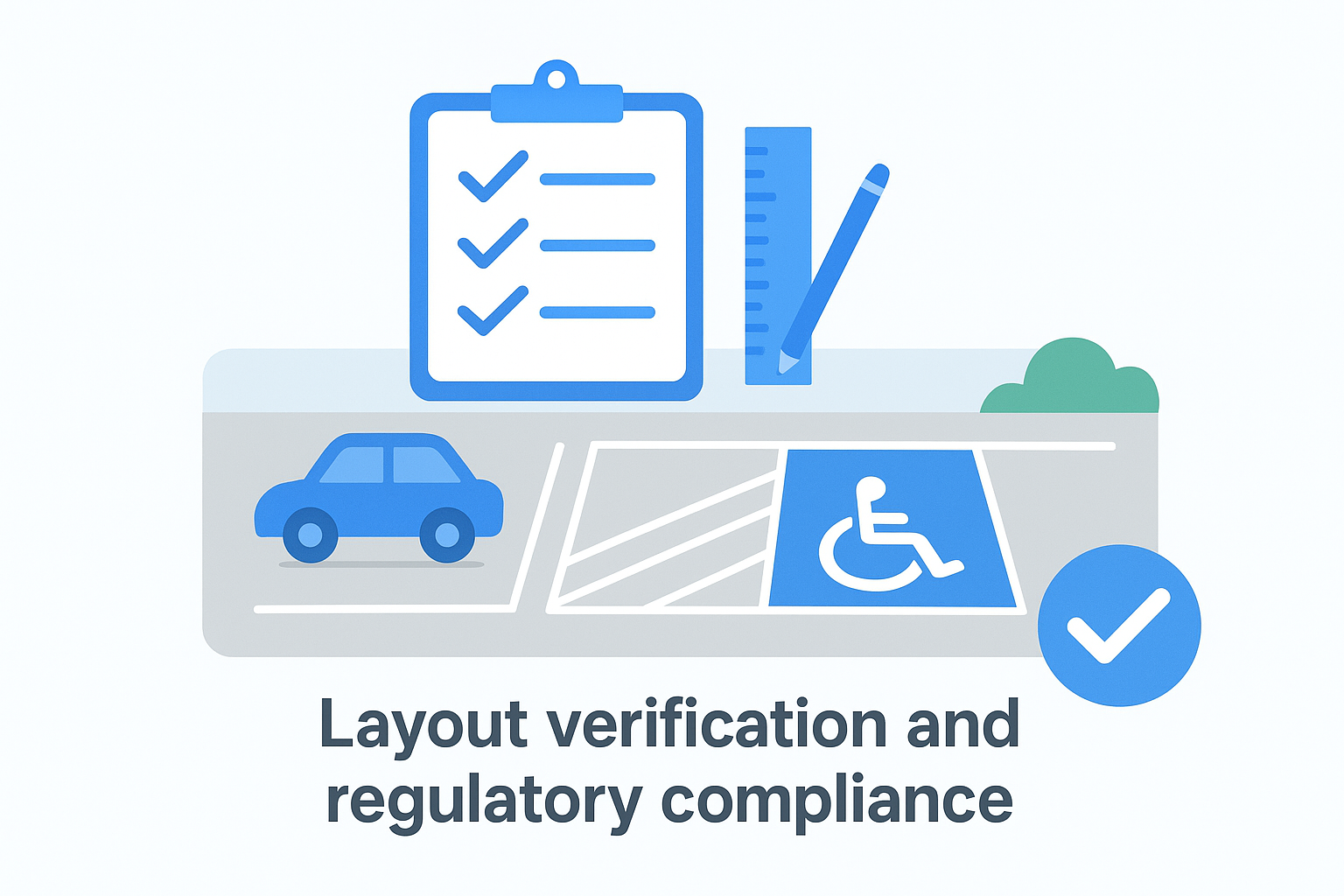
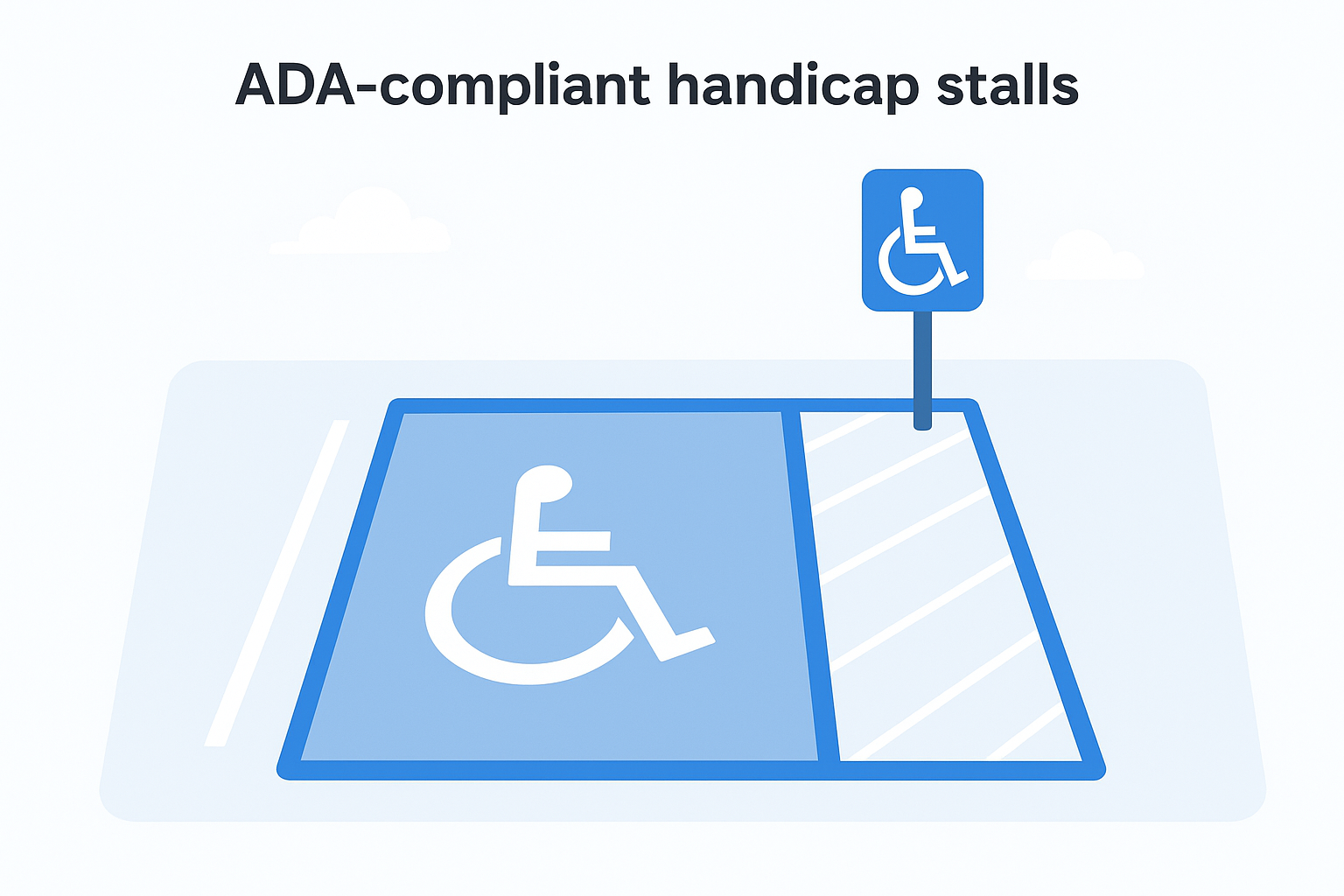
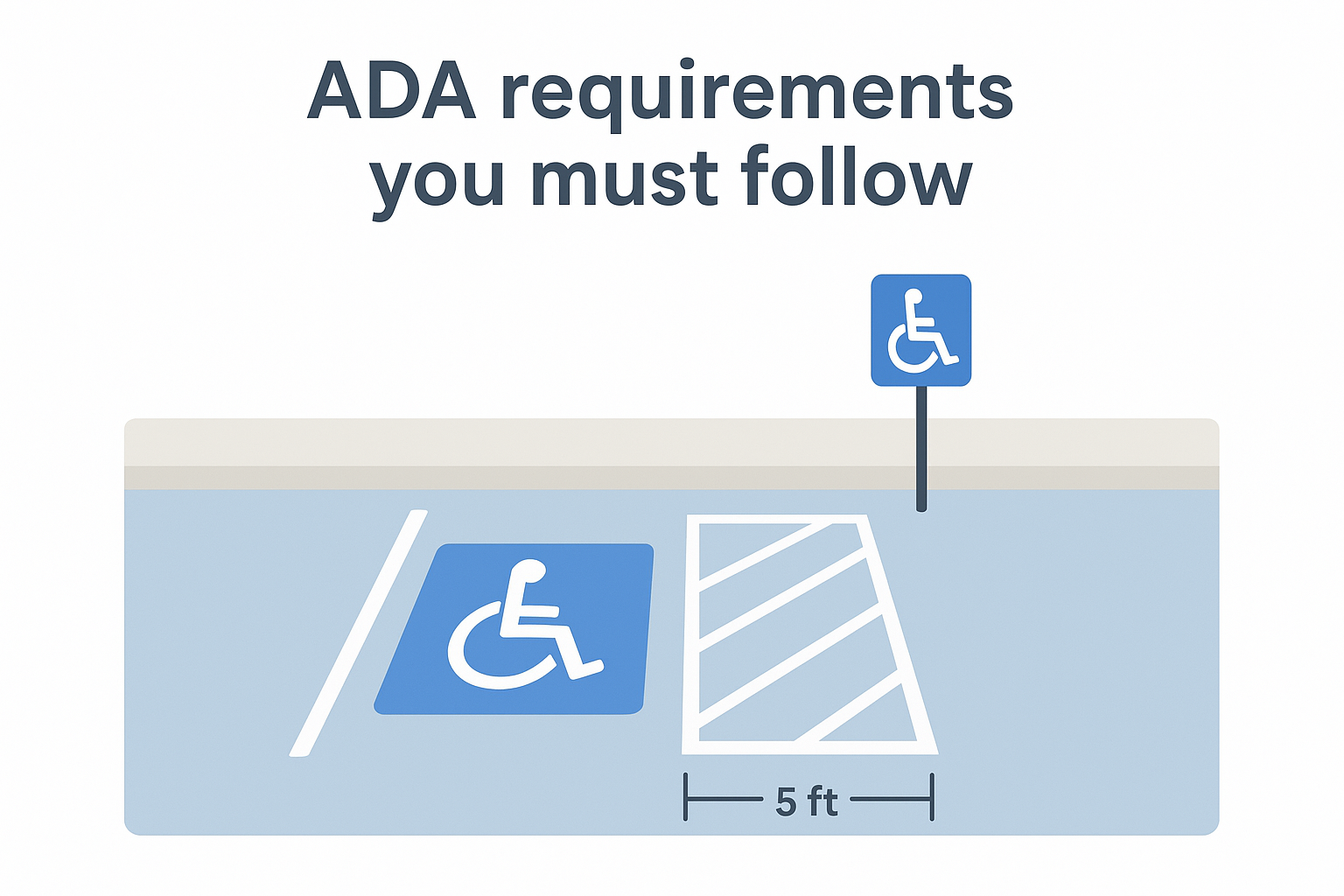
Your contractor must verify that handicap space dimensions, van-accessible zones, and access aisles meet current ADA standards, which changed as recently as 2010 for many facilities. They should also handle permit applications if your municipality requires them and provide you with certification documents after project completion.
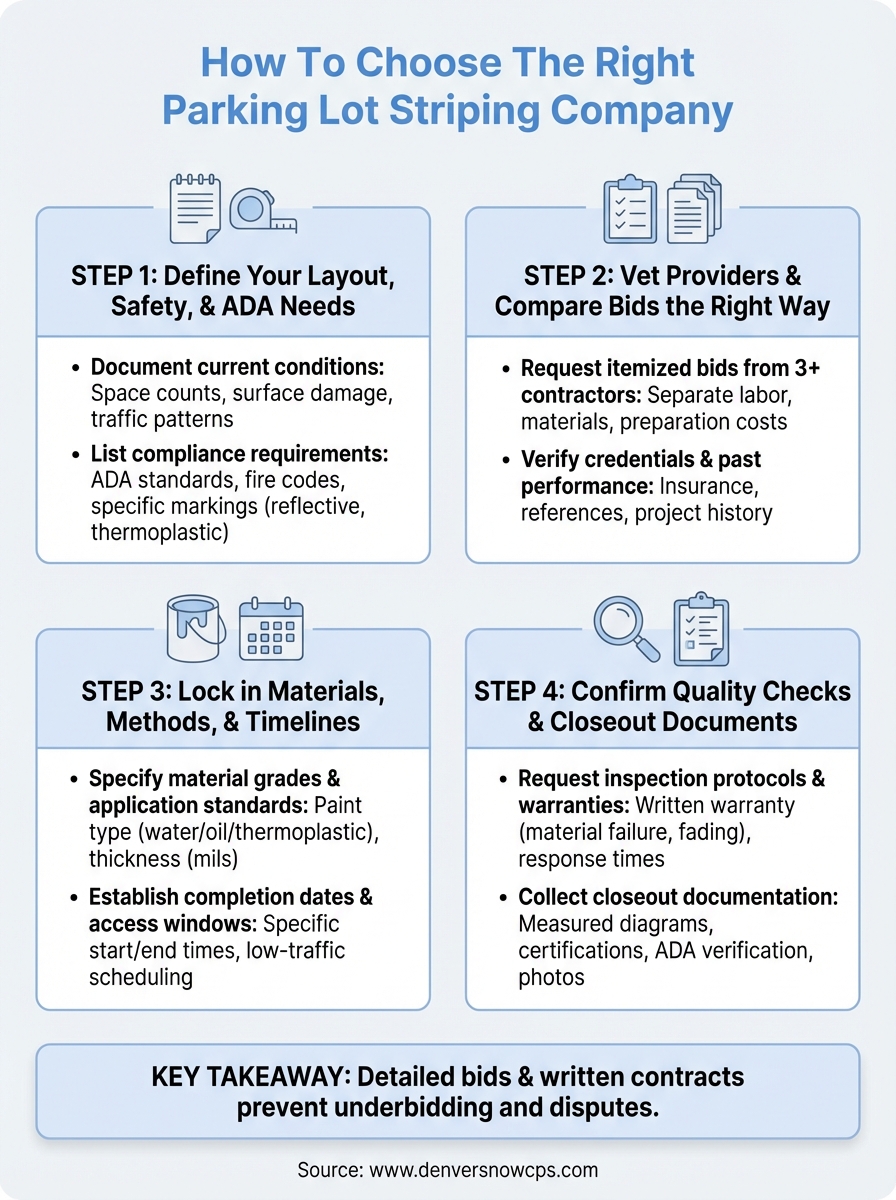
Step 1. Define your layout, safety, and ADA needs
You need to document your exact parking requirements before contacting any parking lot striping company. Walk your property with a notepad and record current space counts, damaged areas, and traffic patterns that cause congestion or confusion. Take photos of every section that needs attention and measure your existing handicap spaces to verify they meet current code.
Clear documentation of your needs prevents contractors from underbidding the project scope and later charging you for change orders.
Document your current conditions
Create a written inventory that includes total parking spaces, fire lane footage, loading zone dimensions, and crosswalk locations. Note any surface damage like cracking, oil stains, or faded markings that might affect striping adhesion. Your contractor needs this information to provide an accurate bid and timeline.
List your compliance requirements
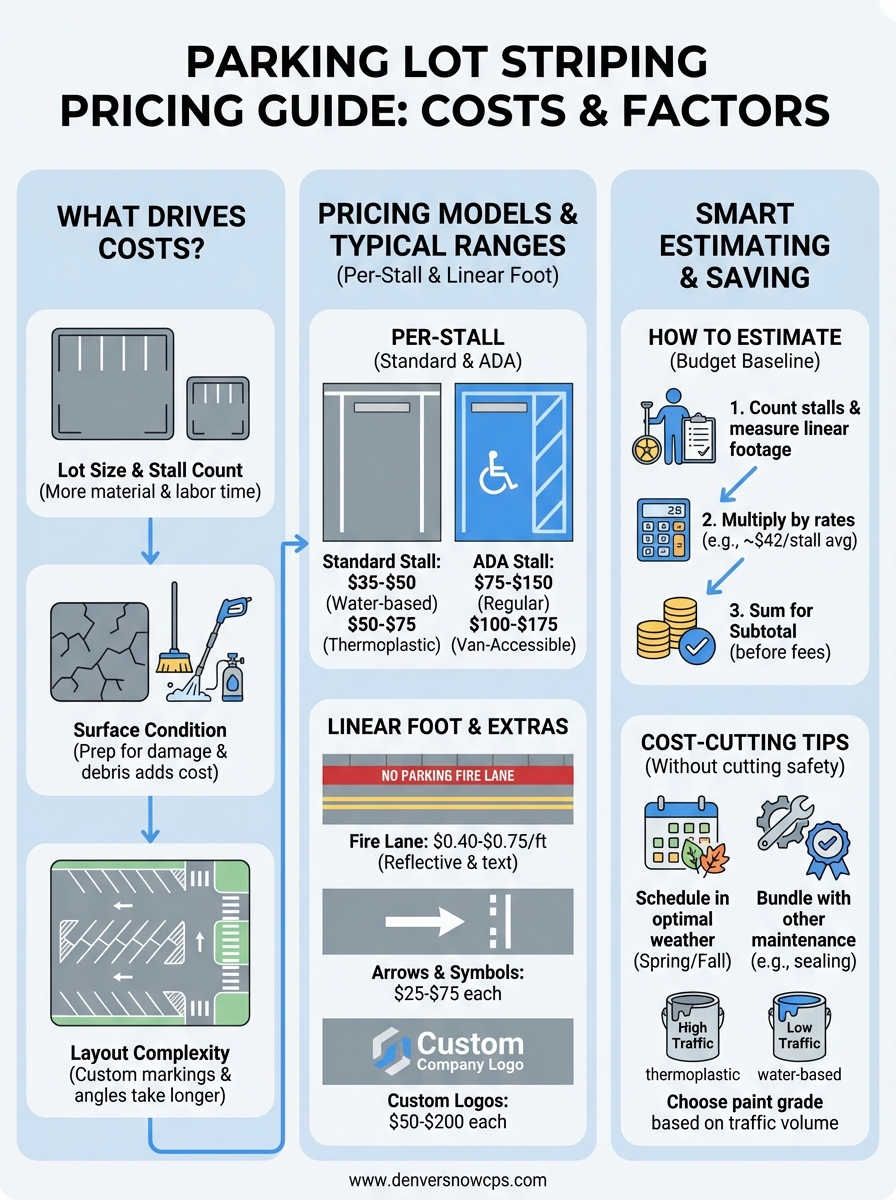
Research your local ADA standards and fire code requirements before requesting bids. Standard ADA spaces require 96 inches of width plus a 60-inch access aisle, while van-accessible spaces need 132 inches total width. You also need to specify whether you require reflective paint for night visibility, thermoplastic markings for high-traffic zones, or specific colors for designated areas like visitor parking or employee zones.
Step 2. Vet providers and compare bids the right way
Request itemized bids from at least three contractors to understand actual cost differences rather than just looking at bottom-line totals. Generic quotes that lump everything into one line item hide where contractors cut corners on materials or skip surface preparation. You need transparency to make informed decisions about which parking lot striping company delivers the best value for your investment.
Detailed bid breakdowns reveal whether a contractor plans to use premium materials or cut costs with inferior products that fail within months.
Request itemized bids from multiple contractors
Ask each contractor to separate labor, materials, and preparation costs in their written proposals. Your bid should list paint type (water-based versus oil-based), square footage of striping, number of handicap spaces, and estimated completion time. This format lets you compare identical scope items across different vendors rather than guessing why one quote runs 30% higher than another.
Verify credentials and past performance
Check that candidates carry general liability insurance with minimum $2 million coverage and workers compensation for all crew members. Request reference contacts from three recent projects similar to your property size and type, then actually call those references to ask about quality, timeline adherence, and post-project issues.
Step 3. Lock in materials, methods, and timelines
Your contract needs to specify exact material grades and application methods before you sign anything. Generic language like "standard paint" or "industry methods" gives contractors room to substitute inferior products or rush application procedures. Put everything in writing to protect your investment and ensure you get the results your property deserves.
Specify material grades and application standards
Require your parking lot striping company to detail whether they’ll use water-based acrylic, chlorinated rubber, or thermoplastic materials in your contract. Water-based paint typically lasts 12 to 18 months in moderate traffic, while thermoplastic markings endure 3 to 5 years in high-traffic zones. Your contract should state minimum paint thickness (15-20 mils wet) and whether they’ll apply one or two coats for optimal visibility.
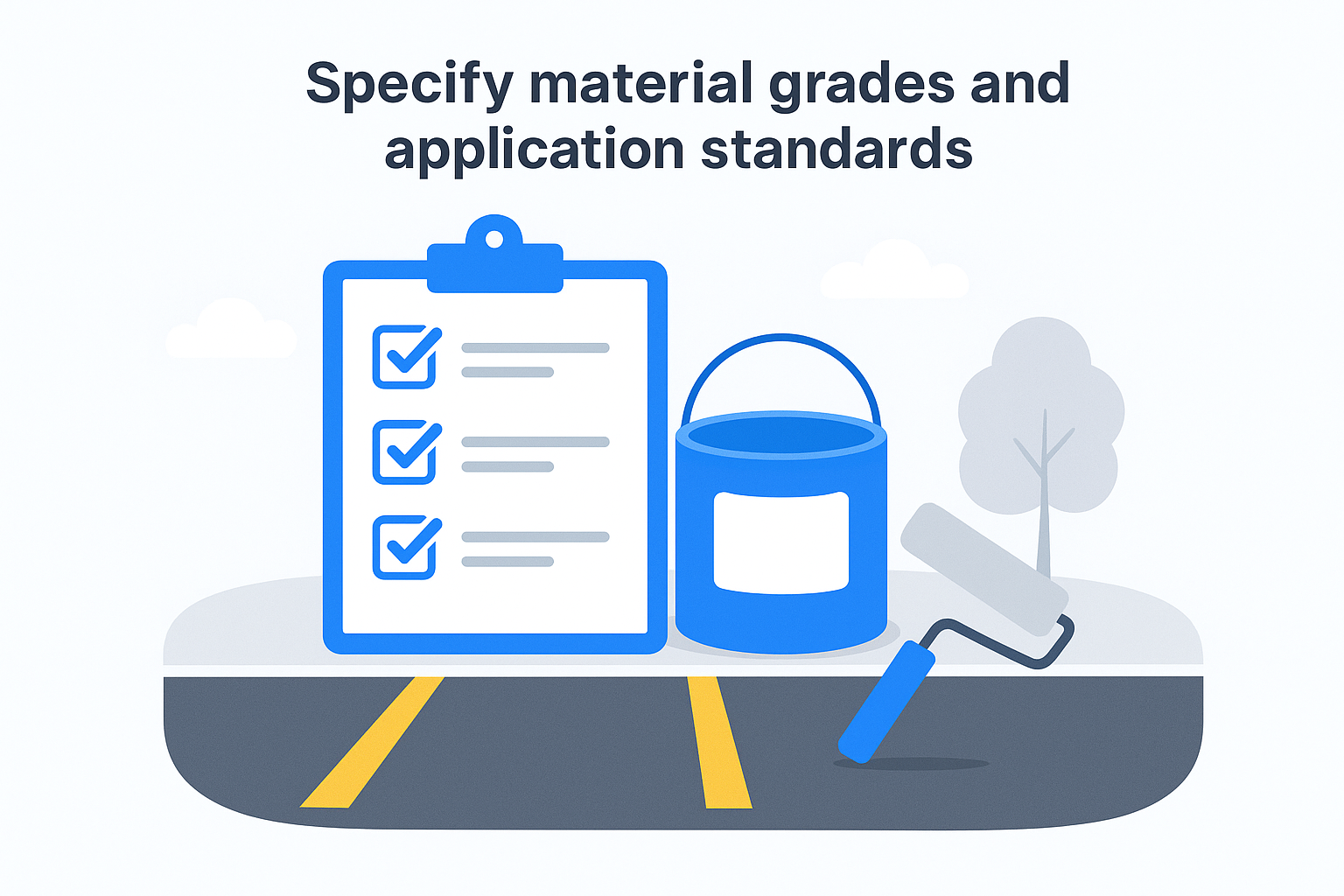
Contracts that specify material grades and application standards eliminate disputes about quality when striping fades prematurely.
Include these details in your written agreement:
- Paint manufacturer and product line
- Minimum coverage rates per gallon
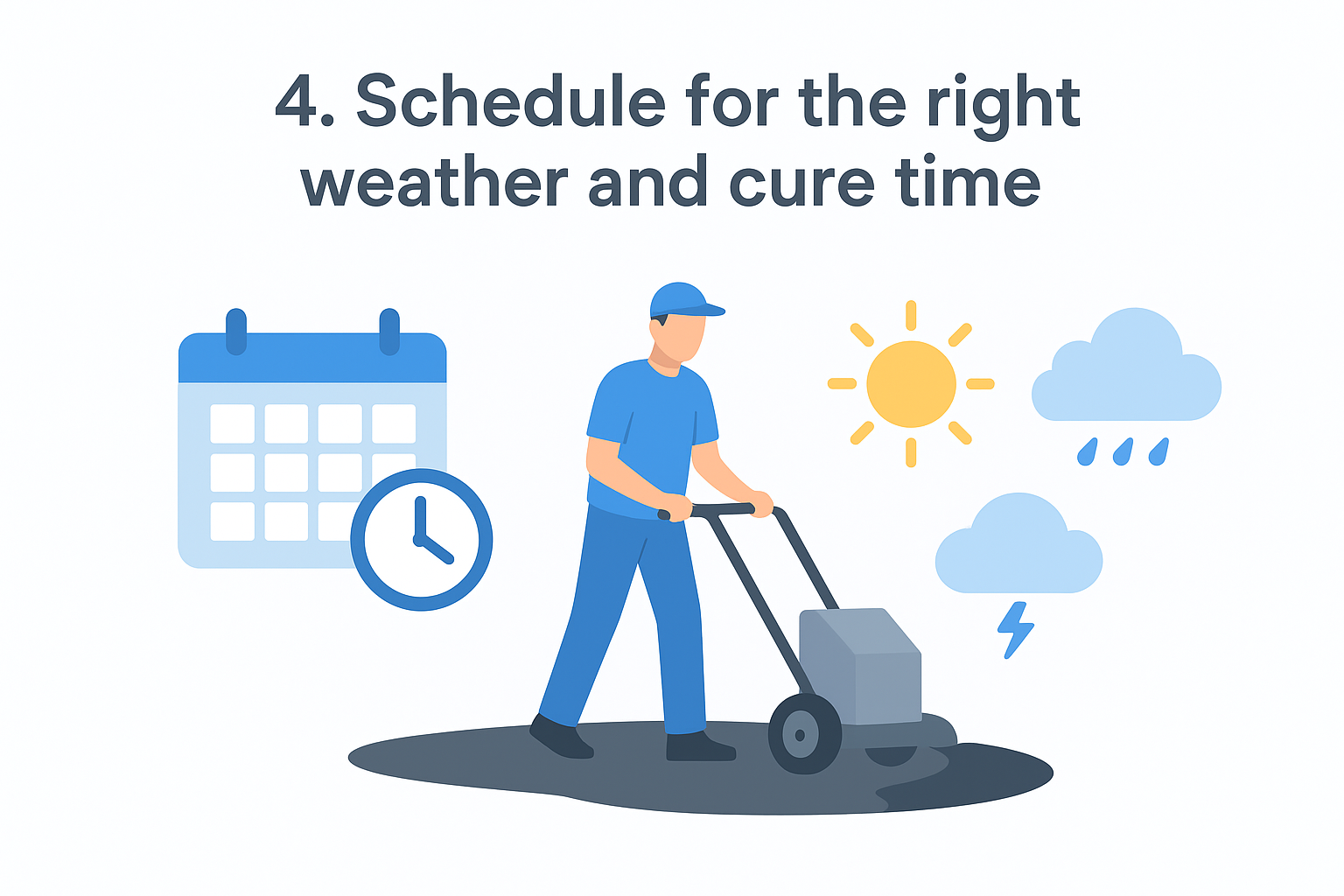
- Surface temperature requirements (50°F minimum)
- Curing time before reopening (2-4 hours typical)
- Weather contingency dates if rain delays work
Establish completion dates and access windows
Lock down specific start and completion dates with financial penalties for delays beyond weather events. Schedule work during your lowest traffic periods like weekends or overnight hours to minimize business disruption.
Step 4. Confirm quality checks and closeout documents
Your parking lot striping company should provide written inspection procedures and completion documentation before you release final payment. Smart property managers require contractors to walk the entire site with them after completion, checking line thickness, color consistency, and measurement accuracy against the original layout plan. This final verification protects you from discovering problems weeks later when the contractor has moved on to other projects.
Request inspection protocols and warranties
Demand a written warranty that covers material failure, premature fading, and adhesion problems for at least 12 months after project completion. Your contractor should specify exactly what triggers warranty coverage and how quickly they’ll respond to legitimate claims. Most professional striping companies offer 1 to 2 year warranties on standard paint applications and 3 to 5 year coverage on thermoplastic markings.
Written warranties with specific response times separate professional contractors from fly-by-night operations that disappear after cashing your check.
Collect closeout documentation
Request these items before releasing final payment:
- Measured layout diagram showing actual dimensions
- Material certifications from paint manufacturers
- ADA compliance verification letter
- Before and after photos of completed work
- Warranty certificate with contact information
- Invoice breakdown matching original bid
These documents protect your property during inspections and provide proof of compliance if liability claims arise later.
Next steps
Choosing the right parking lot striping company protects your investment and keeps your property compliant with safety regulations. Start by documenting your specific needs, then request itemized bids from at least three qualified contractors who carry proper insurance and provide verifiable references. Lock down material specifications and completion timelines in writing before signing any contract.
Review your contractor’s warranty terms carefully and collect all closeout documentation including ADA compliance verification and measured layout diagrams before releasing final payment. These documents protect you during future inspections and provide evidence if liability claims arise.
Your parking lot striping directly impacts customer safety and your business’s professional image. Schedule an inspection of your current pavement conditions now to identify fading lines, damaged surfaces, or outdated layouts that need attention. Denver Snow & Commercial Property Services delivers 40+ years of Denver commercial property expertise with comprehensive asphalt maintenance including professional striping, crack sealing, and parking lot repair.