What Is a Catch Basin? How It Traps Debris and Drains Water
Water pooling in your parking lot after a storm isn’t just an inconvenience, it’s a liability waiting to happen. For commercial property owners and facility managers in Denver, understanding what is a catch basin can mean the difference between a well-drained property and costly flood damage to foundations, pavement, and underground utilities.
A catch basin is one of those infrastructure components that works quietly until it fails. When it does, you’ll notice standing water, debris backing up, and potential slip-and-fall hazards for employees and visitors. Yet many property managers confuse catch basins with storm drains or inlets, leading to maintenance gaps that compound over time.
This guide breaks down exactly how catch basins function, what sets them apart from other drainage structures, and why they matter for your property’s long-term health. At Denver Snow & Commercial Property Services, we’ve spent over 40 years inspecting and cleaning catch basins across the metro area, so we’ll share practical insights from the field alongside the fundamentals you need to know.
What a catch basin is and where you’ll see it
A catch basin is an underground chamber with a grate on top that collects stormwater runoff while trapping debris before it enters your drainage pipes. You’ll recognize it by the metal or concrete grate at ground level, typically square or rectangular, sitting flush with parking lots, sidewalks, or street surfaces. The chamber below the grate extends several feet down and includes a sump area at the bottom where sediment, leaves, trash, and other debris settle out of the water flow.
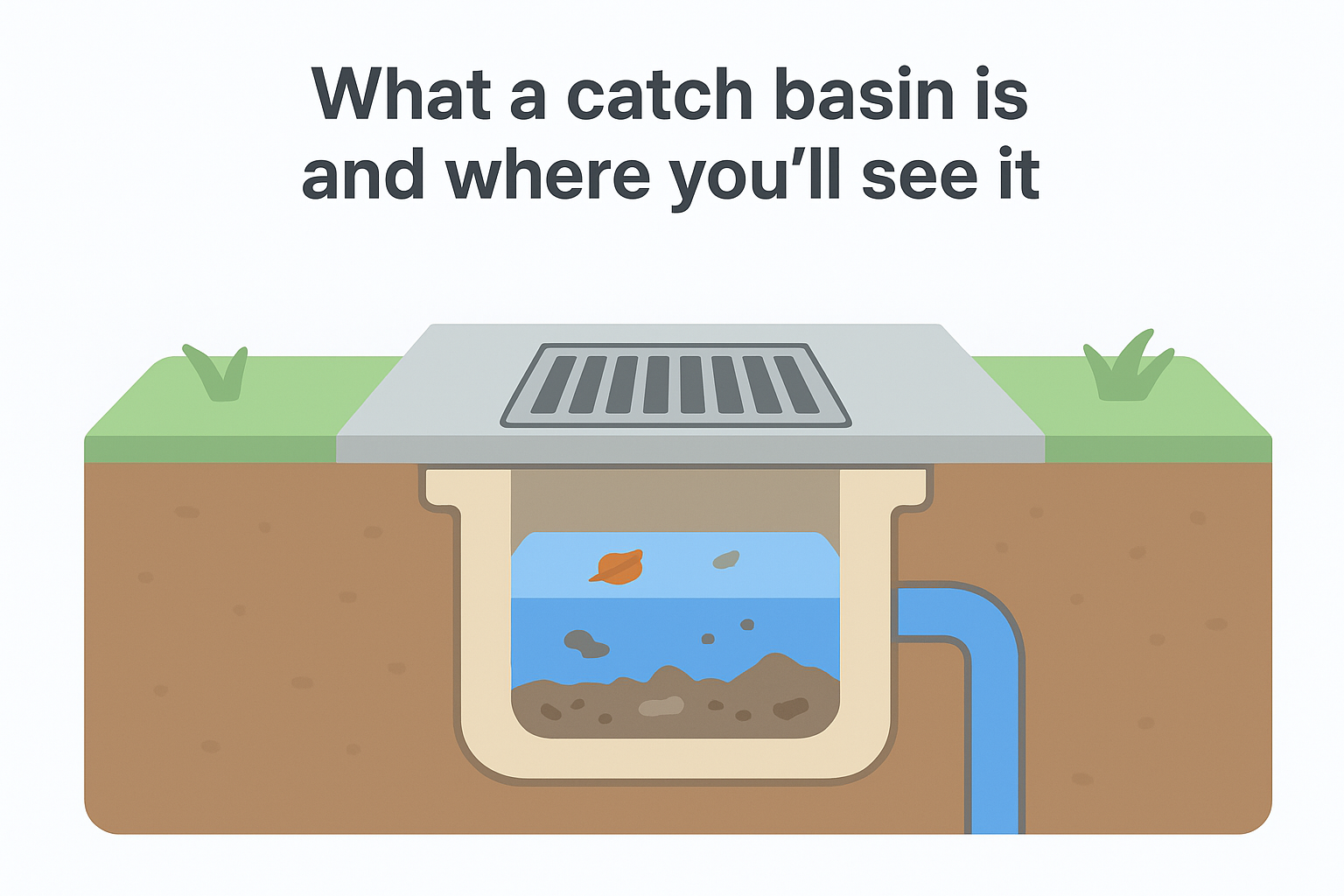
Understanding what is a catch basin means recognizing its dual purpose: it channels water away from your property while simultaneously protecting your underground drainage system from clogs. Without this debris-trapping function, your pipes would fill with leaves, gravel, and trash within months, leading to expensive excavation and replacement work.
Common locations in commercial properties
You’ll find catch basins positioned at low points in parking lots where water naturally flows during rain or snowmelt. Property managers often spot them near building entrances, at the edges of paved surfaces, or along driveways where runoff needs immediate collection. Large retail centers might have a dozen or more catch basins spread across their parking areas, while smaller office buildings typically maintain three to five units depending on the lot size and slope.
Loading docks and service areas also require catch basins because these spaces collect oil, coolant, and debris from delivery trucks that you don’t want entering the municipal storm system. Denver’s strict stormwater regulations make proper catch basin placement mandatory for commercial developments, particularly in areas where runoff could reach natural waterways.
What makes it different from a simple drain
The defining feature of a catch basin is the sediment trap built into its design. Unlike a basic drain that just moves water away, a catch basin holds debris in place through settling. Think of it as a filter point in your drainage system where gravity does the work of separating solids from liquids before the water continues through underground pipes.
A catch basin without regular cleaning becomes just another drain, losing its ability to protect your pipes from clogs.
This settling chamber typically sits 18 to 36 inches deep, giving particles time to drop out of the water column. When you look into a catch basin grate, you’re seeing the top of this chamber, not the pipe outlet. The outlet pipe connects partway up the chamber wall, never at the very bottom, which ensures the trapped sediment stays put even as clean water flows through to the next drainage point.
How a catch basin works during rain and snowmelt
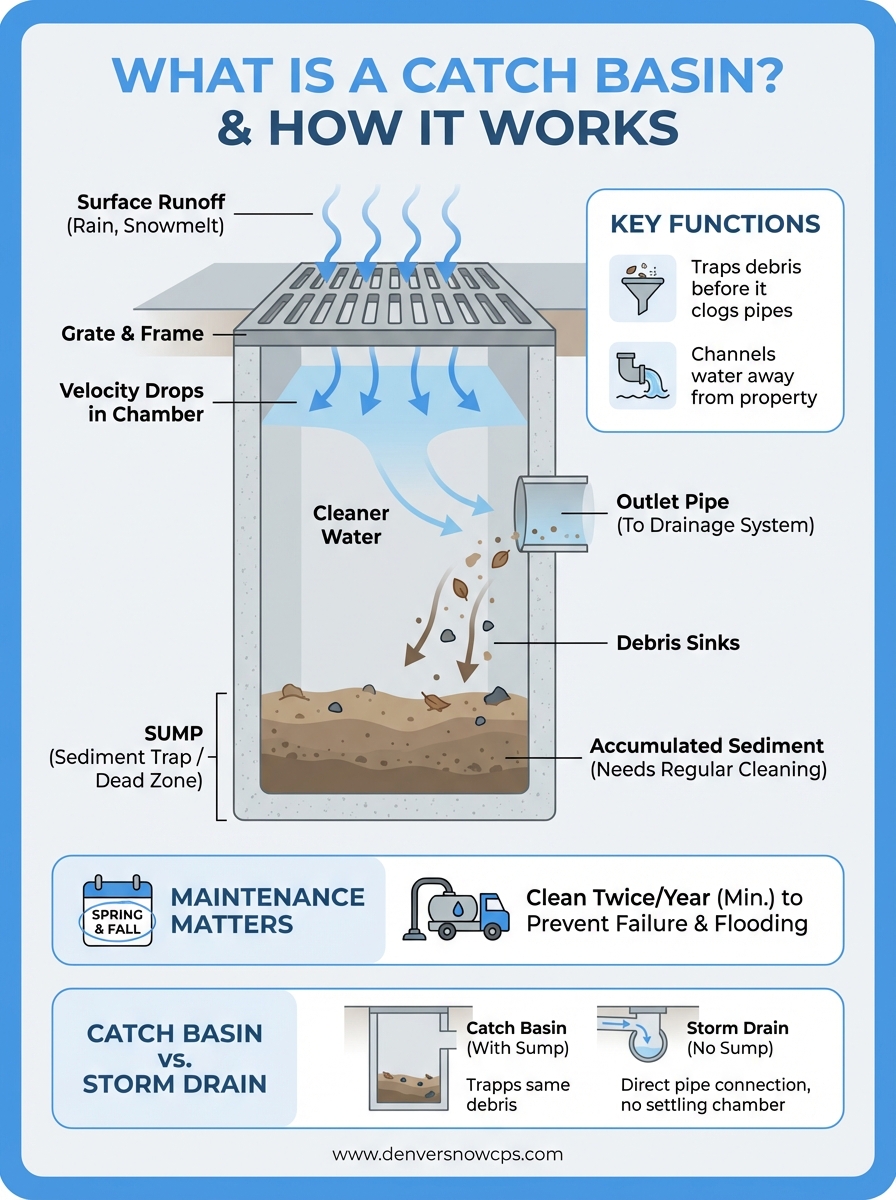
When water hits your parking lot during a storm, it flows toward the catch basin grate and drops into the chamber below. The sudden expansion from a thin sheet of surface water into a larger underground space causes the water velocity to drop dramatically, which triggers the separation process that makes catch basins effective. Heavier particles like sand, gravel, and organic debris sink to the bottom of the sump, while lighter water continues flowing toward the outlet pipe positioned partway up the chamber wall.
The settling process in action
Understanding what is a catch basin means recognizing how gravity does the filtering work without moving parts or complex mechanisms. As stormwater enters the chamber, particles heavier than water drop through the standing water column and accumulate in the sump area at the bottom. This process happens continuously during rainfall, with the first flush of water typically carrying the most debris as it washes accumulated dirt and leaves from your pavement surface.
The first 15 minutes of a storm carries more debris into catch basins than the next several hours combined, making proper sump depth critical for seasonal performance.
Denver’s freeze-thaw cycles add another layer to this process. When snowmelt sends water through your catch basins in spring, you’re dealing with months of accumulated sand, deicer, and debris that settled on your property throughout winter. The catch basin chamber fills with this sediment load much faster than during summer rainstorms, which is why spring cleaning becomes essential for preventing overflow and backup issues before the monsoon season arrives.
Water exit and overflow protection
The outlet pipe connects to the chamber wall above the sump level, ensuring trapped debris stays put while clean water flows through to the next drainage point or municipal system. When water enters faster than the outlet can drain it, the chamber temporarily stores excess volume until flow rates balance out again.
Catch basin parts and common designs
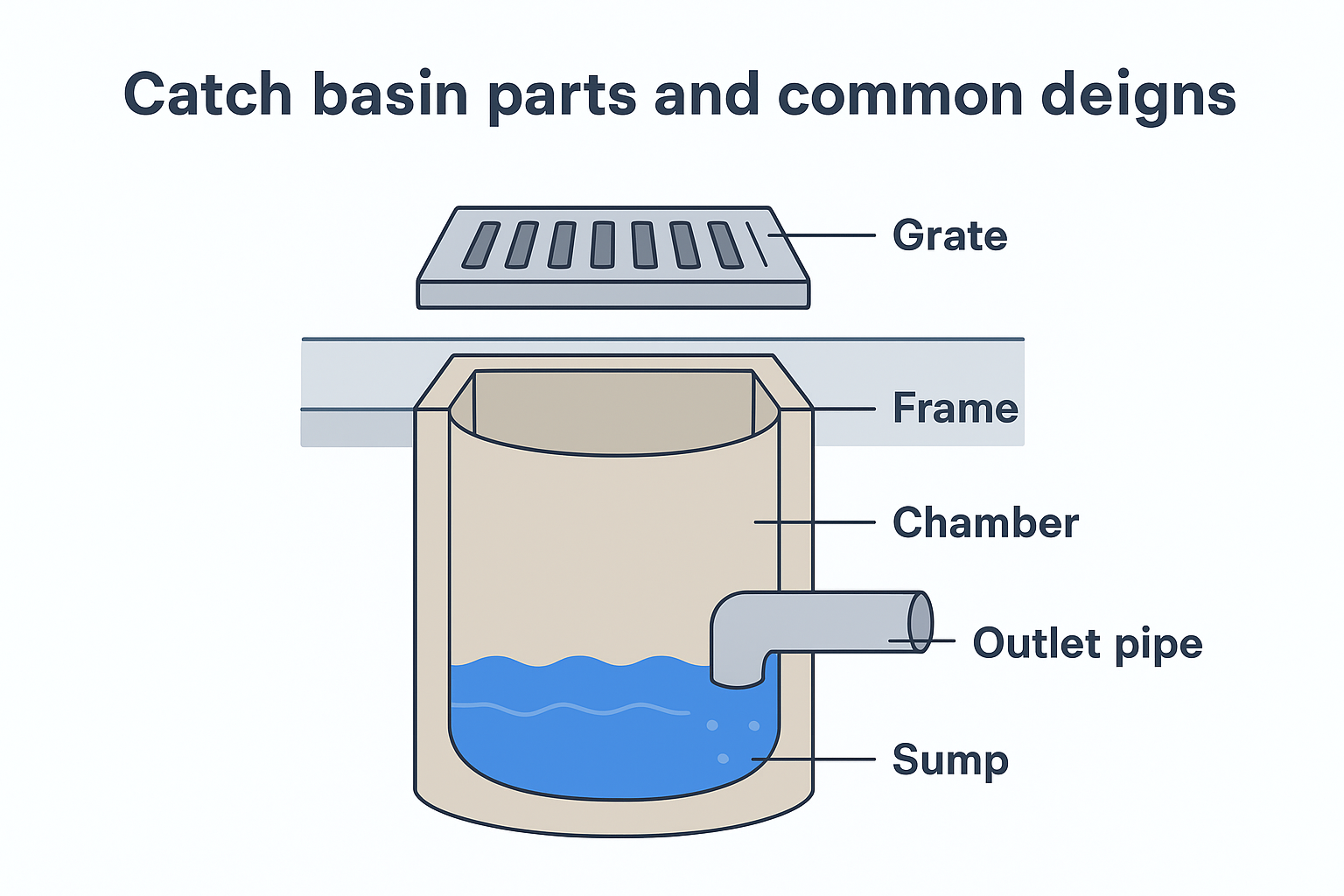
When you inspect a catch basin on your property, you’re looking at five essential components working together to manage water and debris. The grate at the surface provides the entry point while keeping people and vehicles safe from falling into the chamber below. Below that, the frame locks the grate in place and creates the transition between your pavement and the underground structure. The vertical chamber or barrel extends downward, typically constructed from precast concrete rings or poured concrete walls, creating the space where water velocity drops and settling occurs.
Basic structural components
The sump sits at the bottom of the chamber and acts as the primary collection area for trapped debris. You’ll find this section extends below the outlet pipe, creating a dead zone where sediment accumulates without being pulled back into the water flow. Most commercial catch basins feature sumps between 12 and 24 inches deep, though high-traffic areas often require deeper designs to handle increased debris loads.
Commercial properties that skip annual sump cleaning lose up to 40% of their catch basin capacity, turning what is a catch basin into an expensive flood risk.
Your outlet pipe connects partway up the chamber wall, positioned to draw only the cleaner water near the top while leaving settled debris undisturbed. Some designs include a baffle or hood over the outlet pipe to create an extra barrier that prevents floating debris like plastic bags or oil from entering your drainage system.
Material choices and sizing
Concrete remains the standard material for catch basin construction because it handles structural loads from vehicles while resisting decades of freeze-thaw cycles. You’ll occasionally see polymer concrete basins in areas where chemical resistance matters, such as loading docks or industrial yards that handle corrosive materials. Grates come in either cast iron for heavy traffic zones or galvanized steel where lighter loads allow for cost savings without sacrificing function.
Catch basin vs storm drain, inlet, and French drain
Property managers often use these terms interchangeably, but understanding what is a catch basin versus related drainage structures prevents maintenance mistakes and helps you communicate clearly with contractors. Each component serves a distinct role in your commercial property’s water management system, and mixing them up leads to incorrect service requests or unnecessary repairs.
Storm drains and inlets
The terms storm drain and inlet actually describe the same basic structure: a direct connection from the surface to underground pipes without a debris-trapping chamber. When you look at a storm drain grate, water flows straight down and immediately enters the pipe system. These structures rely on your catch basins upstream to remove debris, which means they’re secondary collection points rather than primary filters.
You’ll find inlets positioned between catch basins in long parking lots or along streets where additional water collection improves drainage speed. They cost less to install than catch basins because they skip the sump chamber and settling function, but they also require catch basins nearby to protect the pipe system from clogs.
French drains
A French drain works completely differently from catch basin systems because it handles subsurface water rather than surface runoff. You won’t see a grate at ground level. Instead, contractors dig a trench, fill it with gravel, and bury a perforated pipe that collects water seeping through the soil. These systems address foundation drainage or areas where groundwater creates soggy turf rather than managing parking lot runoff from storms.
French drains and catch basins often work together on the same property, with French drains handling groundwater while catch basins manage surface water from rain and snowmelt.
Commercial properties rarely choose between these systems. You need catch basins for paved areas and French drains for landscape zones where water infiltration causes problems.
Maintenance and problems to watch for
Your catch basin requires regular cleaning to maintain its debris-trapping capacity and prevent overflow during storms. Property managers who neglect this maintenance face backed-up drains, standing water in parking lots, and potential liability claims when vehicles or pedestrians encounter flooded areas. Understanding what is a catch basin means accepting that the sump fills with debris over time and needs periodic removal to keep functioning as designed.
Cleaning frequency and inspection schedule
Plan to clean your catch basins twice per year at minimum, with spring and fall being the critical service windows. Spring cleaning removes the sand, deicer, and debris that accumulated throughout winter, while fall maintenance clears leaves and organic material before snow season starts. High-traffic commercial properties or areas with significant tree coverage may require quarterly service to prevent capacity loss.
You’ll know it’s time for cleaning when water pools around the grate during moderate rain or when you see debris visible through the grate reaching within six inches of the outlet pipe. Professional inspection every 12 months helps catch structural issues like cracked concrete, corroded frames, or settling problems that affect how water enters the basin.
Warning signs of failure
Watch for water backing up through the grate during storms, which indicates either a clogged sump or blocked outlet pipe downstream. Foul odors near the catch basin suggest organic debris decomposing in standing water, creating a maintenance issue before it becomes a drainage emergency.
Catch basins that overflow during moderate rain have typically lost 70% or more of their designed capacity to accumulated sediment and require immediate professional cleaning.
Cracked or damaged grates pose safety hazards and allow larger debris into your system. You might also notice pavement settling around the frame, which signals structural deterioration requiring repair before the entire unit fails.
Key takeaways and what to do next
Understanding what is a catch basin gives you the foundation to protect your commercial property investment from drainage failures and liability risks. These underground chambers trap debris while moving water away from your pavement, preventing costly clogs in your pipe system and reducing flood hazards during Denver’s intense storms. Regular maintenance keeps them functioning as designed, with twice-yearly cleaning being the minimum standard for most commercial properties.
Start by identifying all catch basins on your property and checking their current condition. Look for standing water, visible debris buildup, or structural damage that requires immediate attention. Schedule professional inspection and cleaning before spring snowmelt or fall leaf season hits, when your basins face their highest debris loads. Denver Snow & Commercial Property Services offers comprehensive drainage management and catch basin maintenance backed by over 40 years of local expertise. Contact our team for a property assessment that identifies potential drainage issues before they become expensive emergencies.