Parking Lot Striping Pricing: Costs Per Stall, ADA, And More
Fresh, visible lines in your parking lot aren’t just about aesthetics, they directly impact safety, ADA compliance, and liability exposure. Whether you’re budgeting for a new striping project or comparing contractor quotes, understanding parking lot striping pricing helps you make informed decisions and avoid overpaying. At Denver Snow & Commercial Property Services, we’ve handled striping projects across the Denver metro area since 1983, giving us a clear picture of what drives costs in this market.
Pricing depends on several factors: the size of your lot, the number of stalls, whether you need ADA-compliant spaces, and the condition of your existing pavement. A small retail lot with 30 spaces will cost significantly less than a hospital complex with hundreds of stalls, fire lanes, and directional arrows. Knowing these variables upfront lets you request accurate quotes and compare bids fairly.
This guide breaks down current costs per stall, ADA marking requirements, fire lane striping, and other common line types. You’ll also find practical formulas to estimate your total project cost before you pick up the phone. Let’s get into the numbers.
What affects parking lot striping pricing
Understanding the factors that drive striping costs helps you predict expenses before you request bids. Parking lot striping pricing isn’t a flat rate, it shifts based on your property’s specific needs and current condition. Contractors consider multiple variables when calculating estimates, and knowing these upfront prevents budget surprises.
Your lot’s unique characteristics determine labor hours, material volume, and equipment requirements. A straightforward grid layout with standard stalls requires less time than a complex design with angled parking, crosswalks, and multiple handicap zones. Surface preparation also plays a major role. If your asphalt is cracked, faded, or covered in old paint, contractors need to clean and prep before applying new lines.
Lot size and stall count
The total area of your parking lot sets the baseline for material costs and labor time. Larger lots require more paint, thermoplastic, or tape, and crews spend more hours on-site to complete the work. A 10,000-square-foot lot with 40 stalls costs less than a 50,000-square-foot lot with 200 stalls, even if the per-stall rate stays consistent.
Stall count matters more than square footage for most pricing calculations. Contractors charge per stall because each space requires a set amount of paint and labor, regardless of lot layout. A compact lot with densely packed stalls might have fewer square feet but more individual lines to paint, driving up the total cost.
Surface condition and preparation needs
Cracked or deteriorating pavement forces contractors to add surface prep steps before striping. If your lot has loose debris, oil stains, or flaking old paint, crews must pressure wash or scrape the area clean. This prep work adds hours to the project and increases your final bill.
Fresh asphalt or well-maintained concrete lets crews skip most prep and start striping immediately. You’ll pay significantly less when the surface is clean, dry, and smooth. Conversely, if your lot hasn’t been restriped in years and old markings are barely visible, expect higher costs for the extra labor involved in removal and surface cleaning.
Poor surface prep leads to premature fading and peeling, forcing you to restripe sooner and spend more over time.
Layout complexity and marking types
Simple parallel stalls with minimal extras keep costs low. Complex layouts with angled parking, directional arrows, crosswalks, and loading zones require more precision and time, pushing prices higher. Each additional marking type adds labor hours because crews must measure, mask, and paint different shapes and symbols.
Custom logos, colored stalls, or decorative striping also increase per-project costs. Standard white and yellow lines are straightforward, but if you want your company logo painted near the entrance or colored zones for visitor parking, contractors charge extra for the design work and specialty materials.
Typical price ranges per stall and per foot
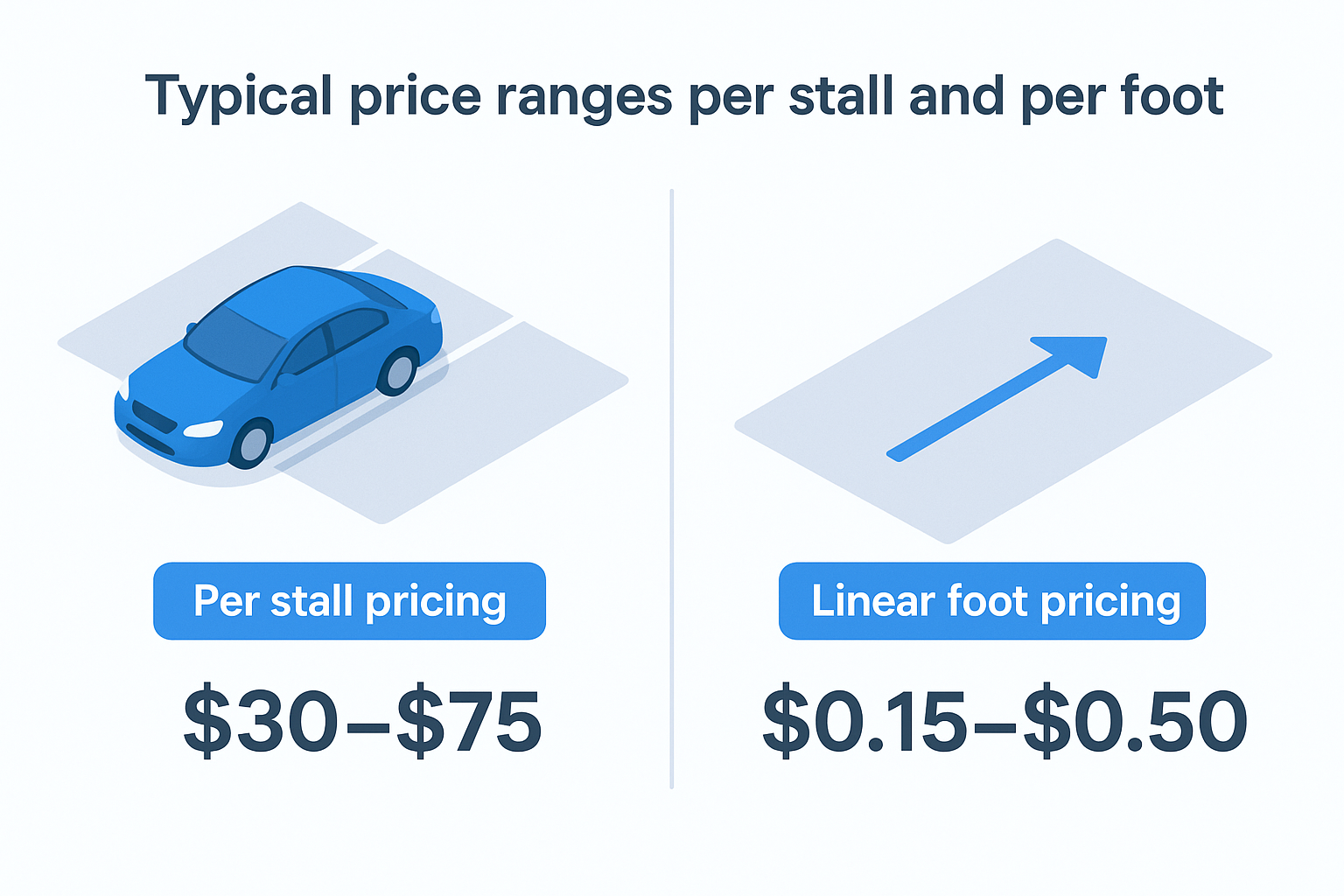
Contractors typically quote parking lot striping pricing using two methods: per stall or per linear foot. Both approaches work, but per-stall pricing gives you a clearer picture of your total cost when you know exactly how many spaces you need. Standard parking stalls in the Denver metro area range from $30 to $75 per space depending on paint type, lot condition, and project size. Linear foot pricing averages $0.15 to $0.50 per foot for basic white or yellow lines.
Per-stall pricing breakdown
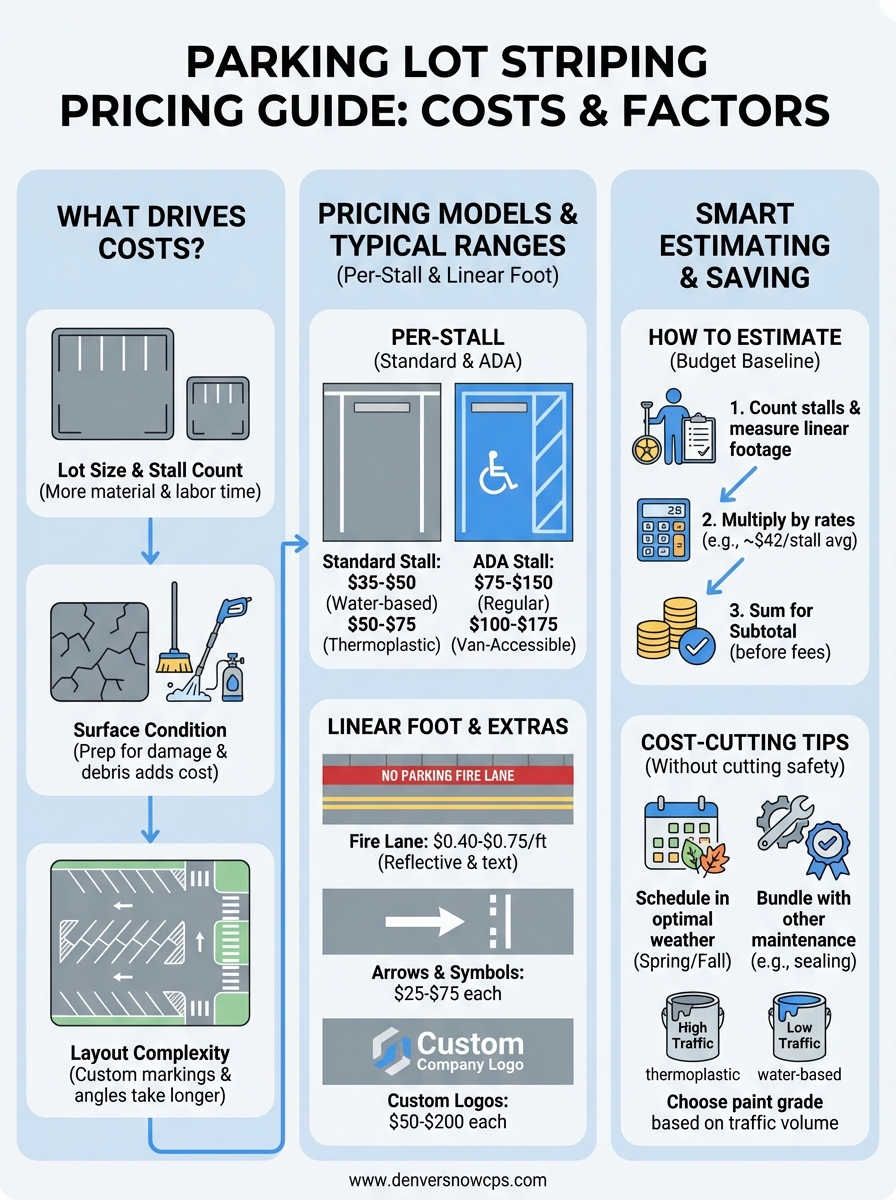
Most commercial striping jobs fall between $35 and $50 per standard stall when you’re restriping an existing lot with water-based traffic paint. This rate includes the four lines that make up a single space plus any connecting dashes or dividers. If you need thermoplastic markings for longer durability, expect to pay $50 to $75 per stall because the material costs more and requires heat application equipment.
Larger projects bring down your per-stall cost through volume discounts. A lot with 20 stalls might run $60 per space, while a 200-stall lot could drop to $35 per stall as contractors spread their setup and travel time across more work. Smaller jobs carry higher per-unit rates because crews still need to mobilize equipment and materials for a shorter project.
Bulk discounts typically kick in once you cross 50 stalls, making larger restriping projects more cost-effective per space.
Linear foot pricing
Contractors charge $0.15 to $0.30 per linear foot for basic white or yellow parking lines with standard traffic paint. Fire lanes, crosswalks, and stop bars use the same rate structure but require more precision and often double lines, increasing your total footage. If you choose reflective or thermoplastic materials, expect $0.35 to $0.50 per foot because these products cost more upfront but last three to five years instead of one to two.
Linear foot pricing works best when you need custom layouts or primarily want arrows, symbols, and directional markings rather than full stalls. Your contractor measures the total line length on your lot and multiplies by their per-foot rate to calculate your project cost.
Prices for ADA stalls, fire lanes, and extras
ADA-compliant markings, fire lanes, and specialty symbols carry different price tags than standard parking stalls because they require specific dimensions, additional paint, and often reflective materials. These elements are non-negotiable for legal compliance, so understanding their costs helps you budget accurately for a complete striping project. Most contractors break out these items separately on your quote rather than bundling them into a per-stall rate.
ADA-compliant handicap stalls
Handicap-accessible spaces cost $75 to $150 per stall because they require wider dimensions, crosshatch patterns, and vertical signage. Each ADA stall needs 96 to 132 inches of width compared to the standard 108 inches for regular spaces, and the adjacent access aisle must be painted with diagonal lines at a 45-degree angle. Your contractor also charges for mounting the vertical handicap sign pole and placard, which federal law requires in addition to the ground markings.
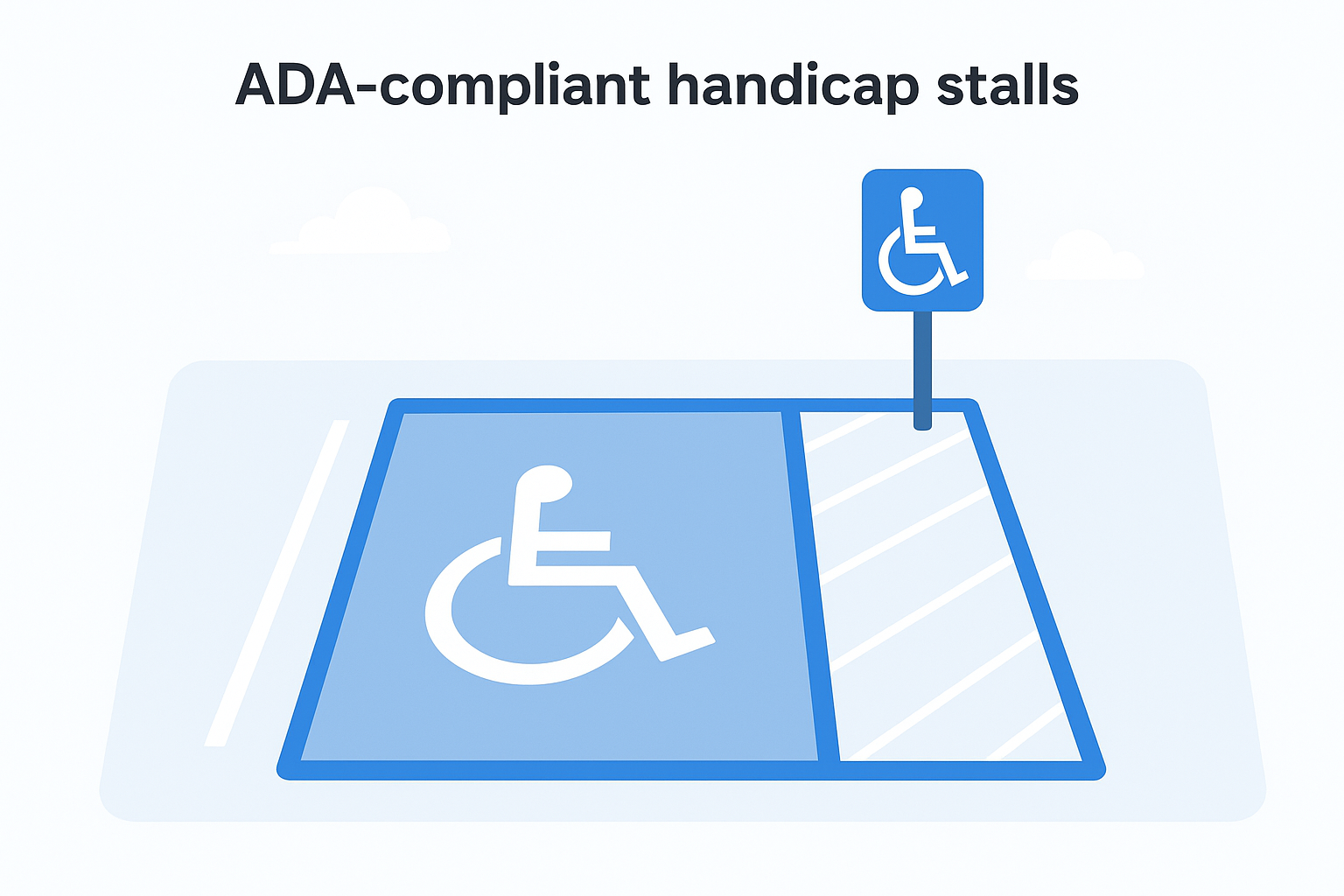
Van-accessible spaces run slightly higher at $100 to $175 per stall due to their increased width requirements and additional signage. These stalls need "Van Accessible" text painted on the access aisle, adding more material and labor time to the job.
ADA violations carry fines up to $75,000 for first offenses, making proper striping a critical investment rather than an optional upgrade.
Fire lanes and no-parking zones
Fire lanes typically cost $0.40 to $0.75 per linear foot because they require double yellow or red lines, reflective paint, and "NO PARKING FIRE LANE" text stenciled every 25 to 50 feet. The paint must be visible year-round, so most contractors use thermoplastic or high-grade reflective materials that increase your per-foot cost but last longer in Denver’s harsh winter conditions.
Red curb painting for no-parking zones runs $1.50 to $3.00 per linear foot when you need continuous color along a curb face. This rate includes surface prep to remove old paint and ensure proper adhesion.
Additional markings and symbols
Directional arrows, stop bars, and crosswalks add $25 to $75 each depending on size and complexity. Standard 36-inch arrows cost less than custom designs or large handicap symbols. Loading zone text, visitor parking labels, and company logos run $50 to $200 per marking based on size and color requirements, directly affecting your overall parking lot striping pricing.
How to estimate your striping job total
You can calculate a reliable budget before contacting contractors by breaking your lot into measurable components and applying industry-standard rates. Start with a physical count of your existing parking stalls, then measure the linear footage of fire lanes, crosswalks, and other specialty markings. This pre-work gives you a baseline estimate that helps you spot inflated bids and negotiate confidently when quotes arrive.
Count your existing stalls and measure footage
Walk your lot with a measuring wheel or tape measure and document every parking space type. Standard stalls, handicap spaces, and van-accessible zones each carry different price points, so separating them in your count prevents underestimating your total. Use a satellite view from online maps to double-check your counts and identify hard-to-reach areas that might need special equipment access.
Measure all linear features including fire lanes, crosswalks, stop bars, and curb painting. Your contractor charges by the foot for these elements, so accurate measurements prevent surprise costs. Add 10% to your footage totals to account for measurement errors and small sections you might have missed during your initial walkthrough.
Apply per-unit rates to each marking type
Multiply your stall counts by the appropriate rates: $35 to $50 for standard spaces, $75 to $150 for ADA stalls, and $100 to $175 for van-accessible zones. Calculate your fire lane costs at $0.40 to $0.75 per foot, and budget $25 to $75 each for arrows and directional symbols based on your earlier measurements.
Using mid-range rates for your estimate ($42 per stall, $0.55 per fire lane foot) gives you a realistic budget that accounts for average material choices and typical Denver lot conditions.
Sum all categories to reach your subtotal for striping work. This number represents the core parking lot striping pricing before contractor overhead, travel time, or weather delays factor into your final quote.
Tips to cut costs without cutting safety
You can reduce your parking lot striping pricing without compromising compliance or visibility by timing your project strategically and making smart material choices. Cutting corners on safety-critical elements like ADA markings or fire lanes invites lawsuits and fines that cost far more than the initial savings, but several legitimate strategies let you trim expenses while maintaining full legal standards.
Schedule during optimal weather windows
Spring and fall offer the best balance of lower contractor rates and ideal striping conditions in the Denver metro area. Crews are less busy during these shoulder seasons compared to the summer rush, and you can negotiate better per-stall rates when contractors want to fill their schedules. Surface temperatures between 50°F and 90°F ensure proper paint adhesion, meaning your lines last longer and you avoid premature restriping costs.
Avoid emergency restriping situations by planning your project six to eight weeks in advance. Last-minute requests force you to accept whatever pricing contractors quote because they know you have limited options. Early planning gives you time to gather multiple bids and choose the best value.
Bundle services with existing maintenance
Combine your striping project with asphalt sealing or repair work to reduce mobilization fees and equipment costs. Contractors charge less overall when they can handle multiple services in one visit rather than making separate trips for each task. Your parking lot benefits from a coordinated maintenance approach that addresses surface degradation before it damages fresh striping.
Bundling asphalt repair with restriping prevents paint from settling into cracks within months, extending your striping lifespan by up to 40%.
Choose paint grade based on traffic volume
Match your paint durability to your actual traffic patterns instead of automatically selecting the most expensive option. High-traffic hospital or retail lots justify thermoplastic striping that lasts five years, while a low-use office building might only need water-based paint reapplied every 18 months at half the cost.
Calculate your annual cost per stall by dividing total project price by expected lifespan. A $75 thermoplastic stall that lasts five years costs $15 annually, while a $35 water-based stall lasting two years costs $17.50 per year, making thermoplastic the smarter long-term choice for busy lots.
Simple next steps
You now have a clear framework to budget your striping project and compare contractor quotes accurately. Armed with per-stall rates, linear foot costs, and ADA requirements, you can spot inflated bids and ask informed questions when vetting contractors. The difference between parking lot striping pricing that fits your budget and overpaying often comes down to understanding these industry standards before you request estimates.
Your next move depends on your lot’s current condition. Schedule a walkthrough with photos to document faded lines, damaged pavement, or compliance gaps that need addressing. This visual record helps contractors provide accurate quotes and protects you from surprise charges when work begins.
Ready to get your lot restriped by a team that’s handled Denver properties since 1983? Contact Denver Snow & Commercial Property Services for a detailed estimate tailored to your specific layout, traffic patterns, and compliance needs.