What Causes Concrete To Crack? 9 Common Reasons In Denver
You’ve noticed cracks spreading across your parking lot or sidewalk, and now you’re wondering what causes concrete to crack, and whether you should be worried. The short answer: cracking is extremely common, but not all cracks are created equal. Some are purely cosmetic, while others signal deeper structural problems that can become expensive liabilities.
In Denver, commercial property owners face a unique set of challenges. Our dramatic temperature swings, intense UV exposure, and freeze-thaw cycles put concrete under constant stress. After more than 40 years maintaining commercial properties across the Denver metro area, our team at Denver Snow & Commercial Property Services has seen every type of crack imaginable, and repaired most of them.
This article breaks down the nine most common reasons concrete cracks in our region. You’ll learn what’s happening beneath the surface, which cracks demand immediate attention, and how to protect your property investment before minor damage turns into major repairs.
Why concrete cracks matter for Denver properties
Understanding what causes concrete to crack is only half the battle. The real question is why you should care, and in Denver’s commercial property market, the answer comes down to three major concerns: liability exposure, escalating repair costs, and property value erosion.
Financial and liability exposure
Every crack in your parking lot or sidewalk creates a potential trip hazard that could land your business in court. Slip-and-fall claims represent one of the most common lawsuits faced by commercial property owners, and insurance companies scrutinize properties with visible concrete damage when setting premium rates. A single personal injury claim can cost $50,000 or more in legal fees and settlements, far exceeding the cost of proactive repairs.
Beyond legal risks, small cracks accelerate into expensive structural failures when left unaddressed. Water infiltration through hairline cracks leads to subgrade erosion, which causes sections to settle and heave. What starts as a $500 crack-sealing job becomes a $15,000 concrete replacement project within two or three seasons. Denver’s freeze-thaw cycles make this progression especially rapid.
Property managers who ignore early-stage cracking typically spend three to five times more on emergency repairs than those who maintain regular inspection schedules.
Property value and operational disruption
Visible concrete damage sends a clear message to potential tenants and buyers: this property hasn’t been properly maintained. Commercial real estate appraisers factor deferred maintenance directly into property valuations, and cracked, uneven surfaces can reduce your asset value by thousands of dollars per affected area. Tenants increasingly demand well-maintained facilities, and deteriorating concrete gives them leverage to negotiate lower lease rates or request costly improvements as conditions of renewal.
Operational impacts extend beyond aesthetics. Delivery trucks struggle with uneven surfaces, shopping carts derail on raised concrete edges, and customers avoid parking in areas they perceive as unsafe. Your property’s earning potential diminishes with every crack that goes unrepaired, creating a compounding effect that becomes harder and more expensive to reverse over time.
The 9 most common causes of concrete cracking
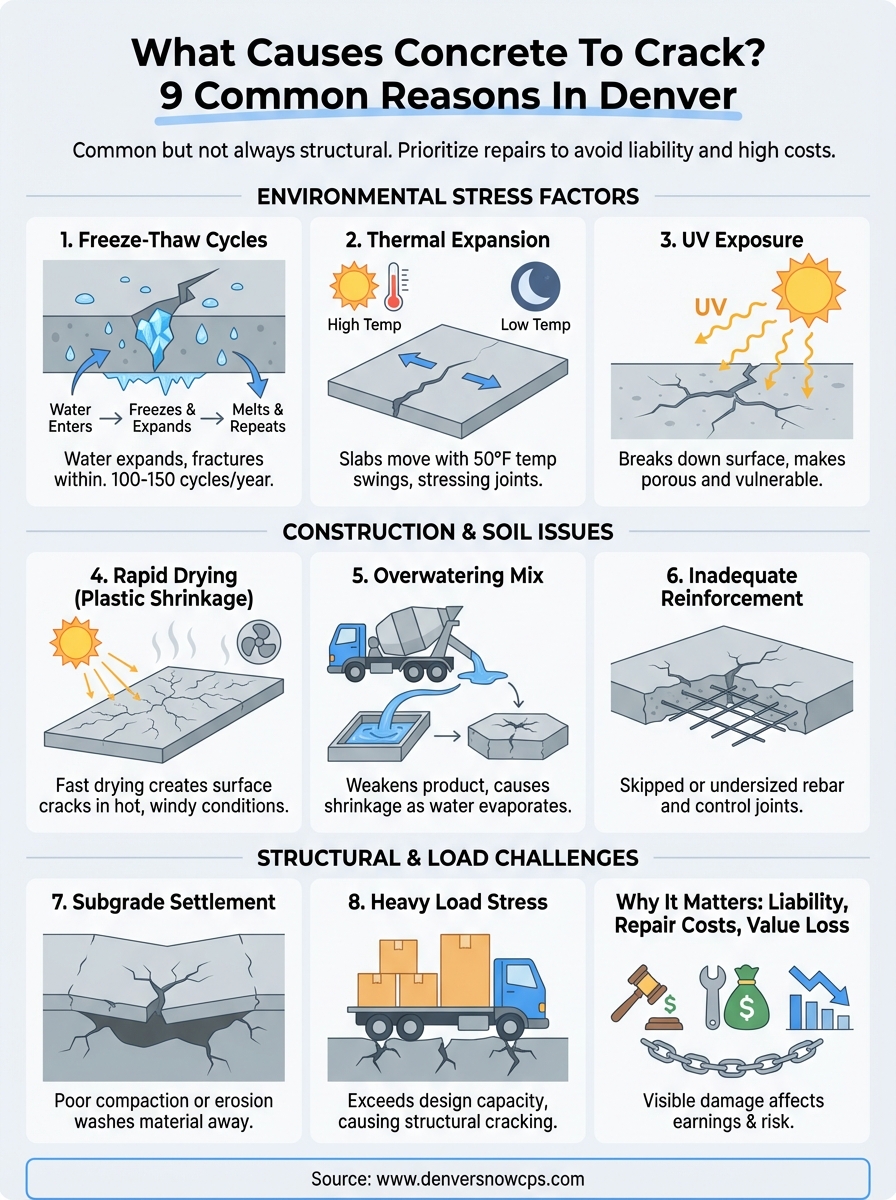
Understanding what causes concrete to crack starts with recognizing the specific environmental and installation factors that affect Denver properties. Your concrete endures constant stress from multiple sources, and these nine culprits explain the majority of damage you’ll encounter across commercial surfaces.
Environmental stress factors
Denver’s freeze-thaw cycles create the single most destructive force on concrete. Water seeps into pores, freezes overnight, expands by 9%, and fractures the material from within. This cycle repeats 100 to 150 times annually in our region. UV radiation from high-altitude sun exposure also breaks down the concrete surface, making it more porous and vulnerable to moisture penetration.
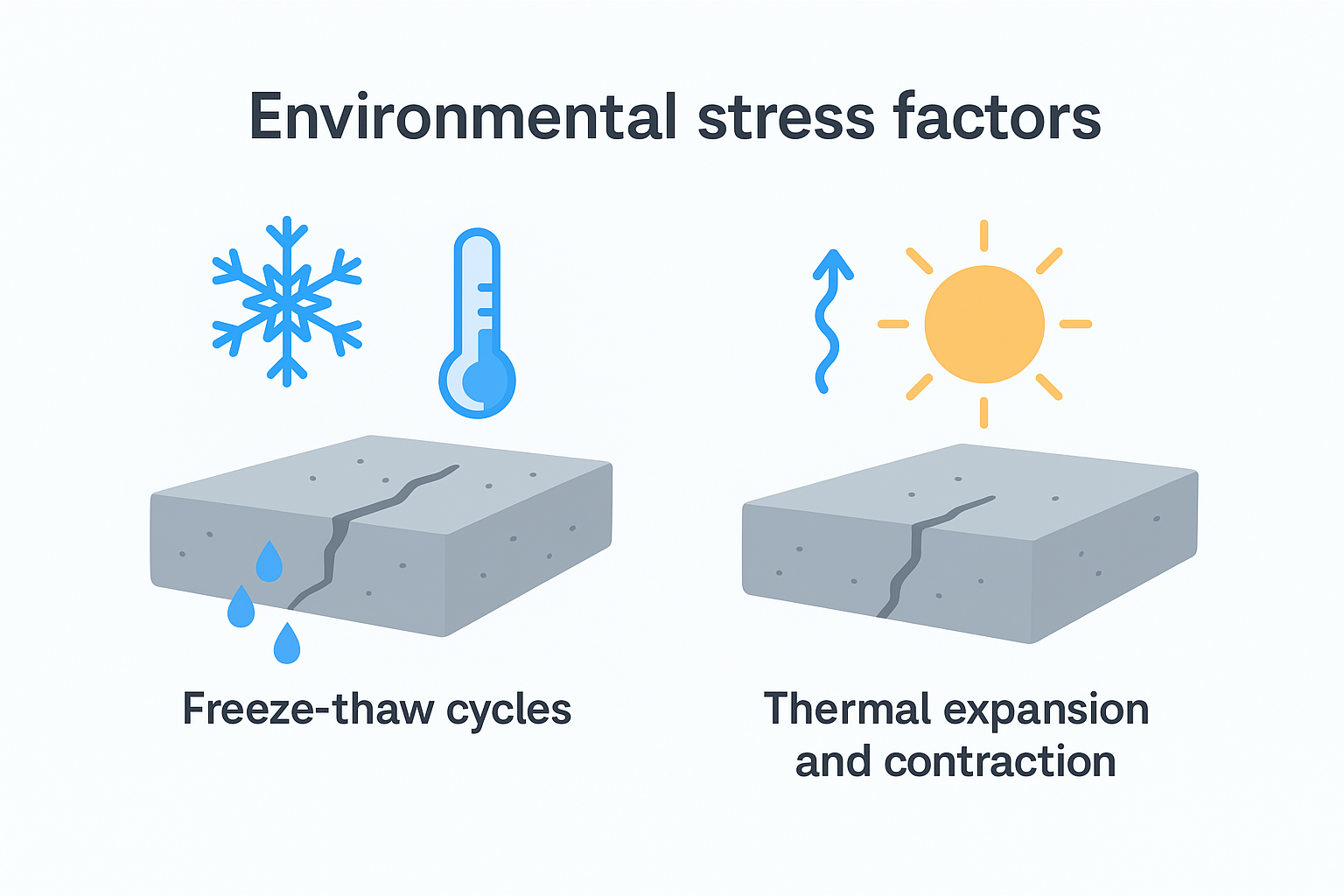
Thermal expansion and contraction from our 50-degree temperature swings causes concrete slabs to move constantly. Your sidewalks expand in afternoon heat and contract overnight, creating stress at joints and weak points.
Construction and soil issues
Rapid drying (plastic shrinkage) happens when installers pour concrete during hot, windy days without proper curing. The surface dries faster than the interior, creating surface cracks within hours. Overwatering the mix weakens the final product and leads to shrinkage cracks as excess water evaporates.
Subgrade settlement occurs when soil beneath your concrete wasn’t properly compacted or when erosion washes material away. Inadequate reinforcement means contractors skipped or undersized rebar and control joints. Finally, heavy load stress from delivery trucks exceeding the slab’s design capacity causes structural cracking that worsens rapidly.
Each of these factors compounds in Denver’s climate, making proactive maintenance essential rather than optional.
How to read crack patterns and severity
Not all cracks signal the same level of concern. Learning to identify crack patterns and assess their severity helps you prioritize repairs and avoid unnecessary panic over cosmetic damage. Your ability to distinguish between structural threats and minor surface issues determines whether you need emergency service or can schedule routine maintenance.
Pattern types and what they reveal
Hairline cracks (less than 1/16 inch wide) typically result from surface shrinkage and rarely indicate structural problems. These appear as thin, random lines across the surface. Pattern cracking (resembling a spiderweb or map) suggests plastic shrinkage or inadequate curing during installation. While unsightly, these cracks usually stay shallow and stable.
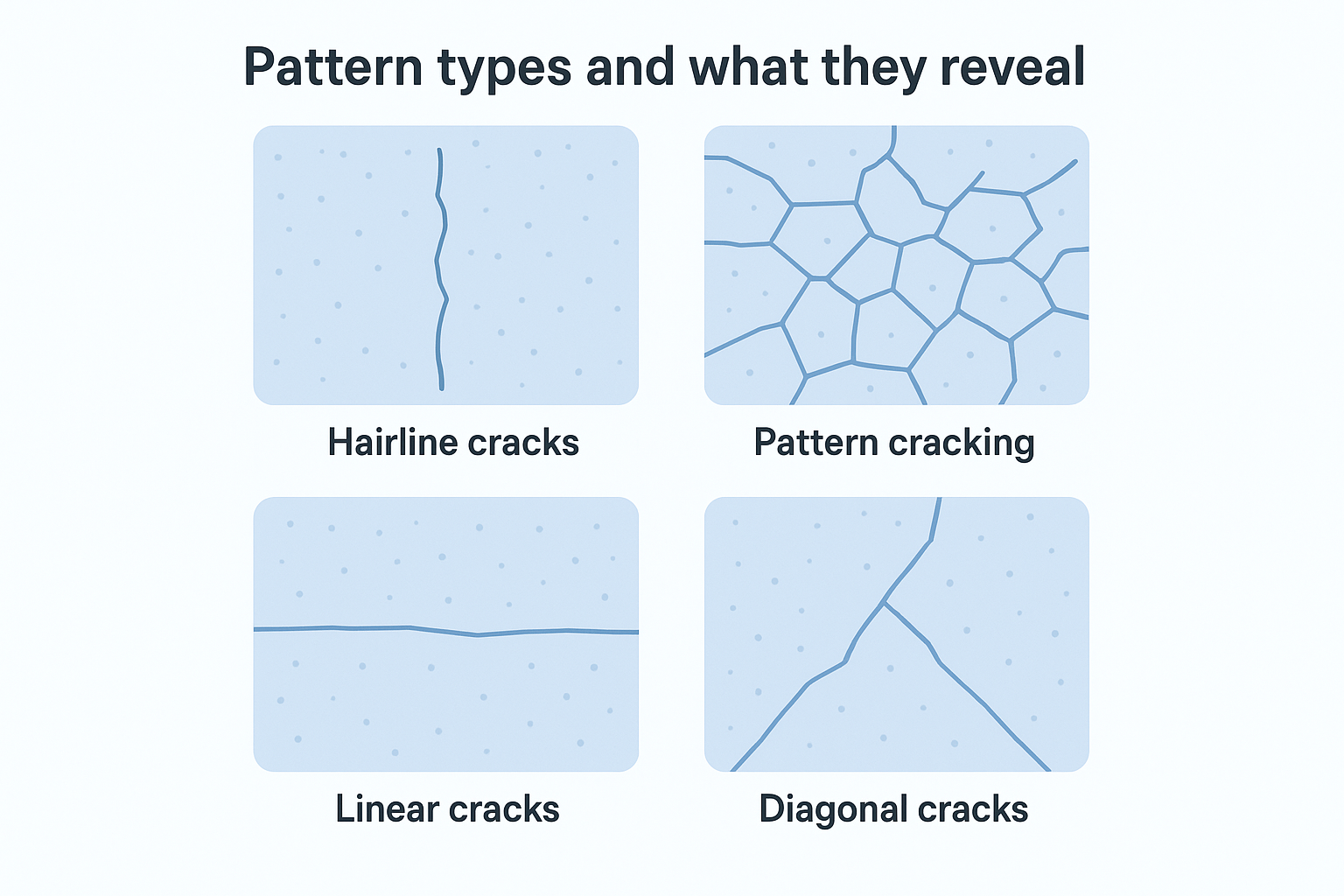
Linear cracks running straight across a slab often follow the path of improper or missing control joints. Diagonal cracks extending from corners signal settlement issues beneath the concrete. Spalling (surface flaking and pitting) combined with cracking indicates advanced freeze-thaw damage that accelerates rapidly without intervention.
Cracks wider than 1/4 inch or those showing vertical displacement between sides require immediate professional assessment, regardless of pattern type.
Measurement and urgency indicators
You should measure crack width using a standard ruler or crack gauge. Cracks under 1/8 inch wide generally qualify for simple sealing. Anything exceeding 1/4 inch demands structural evaluation before repair. Check if you can insert a credit card into the gap; if it slides in easily, the crack needs priority attention.
Monitor whether cracks grow over time by marking their endpoints with permanent marker and photographing them monthly. Active cracks that widen seasonally reveal ongoing movement that standard repairs won’t solve.
How to prevent concrete cracks in Denver
Prevention costs a fraction of what you’ll spend on repairs, and most concrete damage becomes predictable when you understand what causes concrete to crack in Denver’s climate. Your maintenance strategy needs to address both installation quality and ongoing care to extend the lifespan of your commercial surfaces.
Design and installation best practices
Proper concrete thickness and reinforcement form your first line of defense. Your slabs need adequate depth (typically 4 to 6 inches for parking areas) with correctly spaced rebar or wire mesh. Contractors must install control joints every 8 to 12 feet to manage natural expansion and contraction. These intentional weak points direct cracks to form in predetermined locations rather than randomly across your surface.
Soil preparation determines long-term stability. Your installer should compact the subgrade to 95% density and add 4 to 6 inches of gravel base for drainage. They need to pour concrete during moderate temperatures (50-80°F) and apply proper curing techniques, keeping surfaces moist for at least seven days after installation.
Ongoing maintenance strategies
Apply penetrating concrete sealers every two to three years to block moisture infiltration and protect against freeze-thaw damage. Clean your surfaces quarterly to remove debris that traps water against the concrete.
Consistent seasonal maintenance reduces crack formation by 60% compared to properties that only address problems reactively.
Keep drainage systems clear so water flows away from concrete edges. Inspect surfaces twice annually (spring and fall) to catch hairline cracks before they widen into structural problems.
How to respond when you find cracks
Your response time directly impacts repair costs and liability exposure. The moment you discover cracks, you need to take immediate documentation steps and determine whether the situation requires emergency intervention or scheduled repair. Understanding what causes concrete to crack helps you assess urgency, but your actions in the first 24-48 hours often prevent minor issues from becoming major structural failures.
Document and assess the damage
Start by photographing every crack from multiple angles, including close-ups that show width and distant shots that reveal location context. Measure crack widths with a ruler and note the date of discovery. Your documentation creates a baseline for monitoring whether cracks grow over time, and this evidence protects you if liability claims arise later.
Mark crack endpoints with permanent marker or spray paint so you can track expansion. Check for vertical displacement by running your hand across the surface. Any height difference between sides indicates settlement that needs professional evaluation beyond surface repairs.
Properties that document cracks within 48 hours of discovery reduce their average repair costs by 40% compared to those that delay assessment.
Contact professionals for evaluation
Call a concrete specialist immediately if you find cracks wider than 1/4 inch, active water seepage, or displacement exceeding 1/8 inch. These conditions signal structural problems that worsen rapidly through Denver’s freeze-thaw cycles. Schedule routine inspections for hairline cracks that you’ve documented and marked for monitoring.
What to do next
Understanding what causes concrete to crack puts you ahead of most property owners, but knowledge alone doesn’t protect your investment. Your next step depends on whether you discovered active damage or want to prevent future problems before they develop into expensive repairs.
If you found cracks during your property walk-through, schedule a professional inspection within the next two weeks. Denver’s spring thaw accelerates damage that stayed dormant through winter, and early intervention saves thousands compared to emergency repairs in peak season. Properties without current damage still need bi-annual inspections (April and October) to catch problems in their earliest, most affordable stages.
Denver Snow & Commercial Property Services has maintained commercial concrete across the Denver metro for over 40 years. We understand the unique challenges your property faces from freeze-thaw cycles and settlement issues, and we provide solutions that prevent liability exposure while preserving property value. Contact our team for a concrete assessment and protect your investment before minor cracks become major structural expenses.