Catch Basin vs Storm Drain: Differences, Uses, And Costs
Water pooling in your parking lot after a storm isn’t just an eyesore, it’s a liability waiting to happen. For commercial property managers, understanding the infrastructure beneath your pavement is essential to preventing flooding, protecting your investment, and keeping visitors safe. That’s where the catch basin vs storm drain question becomes relevant.
These two components are often confused or used interchangeably, but they serve distinct purposes within your property’s drainage system. One collects water from the surface; the other transports it away. Knowing which is which, and how they work together, helps you make smarter maintenance decisions and avoid costly repairs.
At Denver Snow & Commercial Property Services, we inspect and maintain drainage systems year-round for commercial facilities across the Denver metro area. In this guide, we’ll break down the key differences between catch basins and storm drains, explain their respective functions, and cover the costs involved in installation and upkeep. Whether you’re troubleshooting drainage issues or planning preventive maintenance for your property, this comparison will give you the clarity you need.
Why stormwater drainage matters in Denver
Denver’s location at the base of the Rocky Mountains creates unique drainage challenges that commercial property owners can’t afford to ignore. The city sits at an elevation where rapid temperature swings, afternoon thunderstorms, and sudden snowmelt events combine to overwhelm undersized or poorly maintained stormwater systems. When your drainage infrastructure fails, water backs up into parking lots, damages asphalt, and creates hazardous conditions for employees and customers within hours.
Flash flooding and severe weather patterns
The Front Range experiences some of the most intense rainfall events in the region, with summer storms dropping inches of precipitation in under an hour. These cloudbursts don’t give water time to absorb into the soil, which means every drop runs across your pavement toward the nearest drain. If your catch basins are clogged or your storm drains can’t handle the volume, you’ll see standing water that takes days to evaporate and leaves behind structural damage.
Proper drainage isn’t optional in Denver’s climate; it’s the only way to protect your property from preventable water damage.
Spring snowmelt adds another layer of complexity. When temperatures climb above freezing after heavy snow, the melt rate can exceed what your drainage system was designed to handle. Properties without routine inspection and cleaning face flooded parking areas, eroded landscaping, and water intrusion into building foundations.
Liability and asset protection
Water accumulation on your commercial property introduces slip-and-fall risks that directly impact your insurance premiums and legal exposure. A single injury claim can cost more than years of preventive maintenance. Beyond liability, unchecked water undermines pavement integrity, leading to potholes and cracks that require expensive asphalt replacement instead of basic repairs. Understanding the catch basin vs storm drain relationship helps you identify which components need attention before minor issues escalate into major capital expenses.
What a storm drain is and how it works
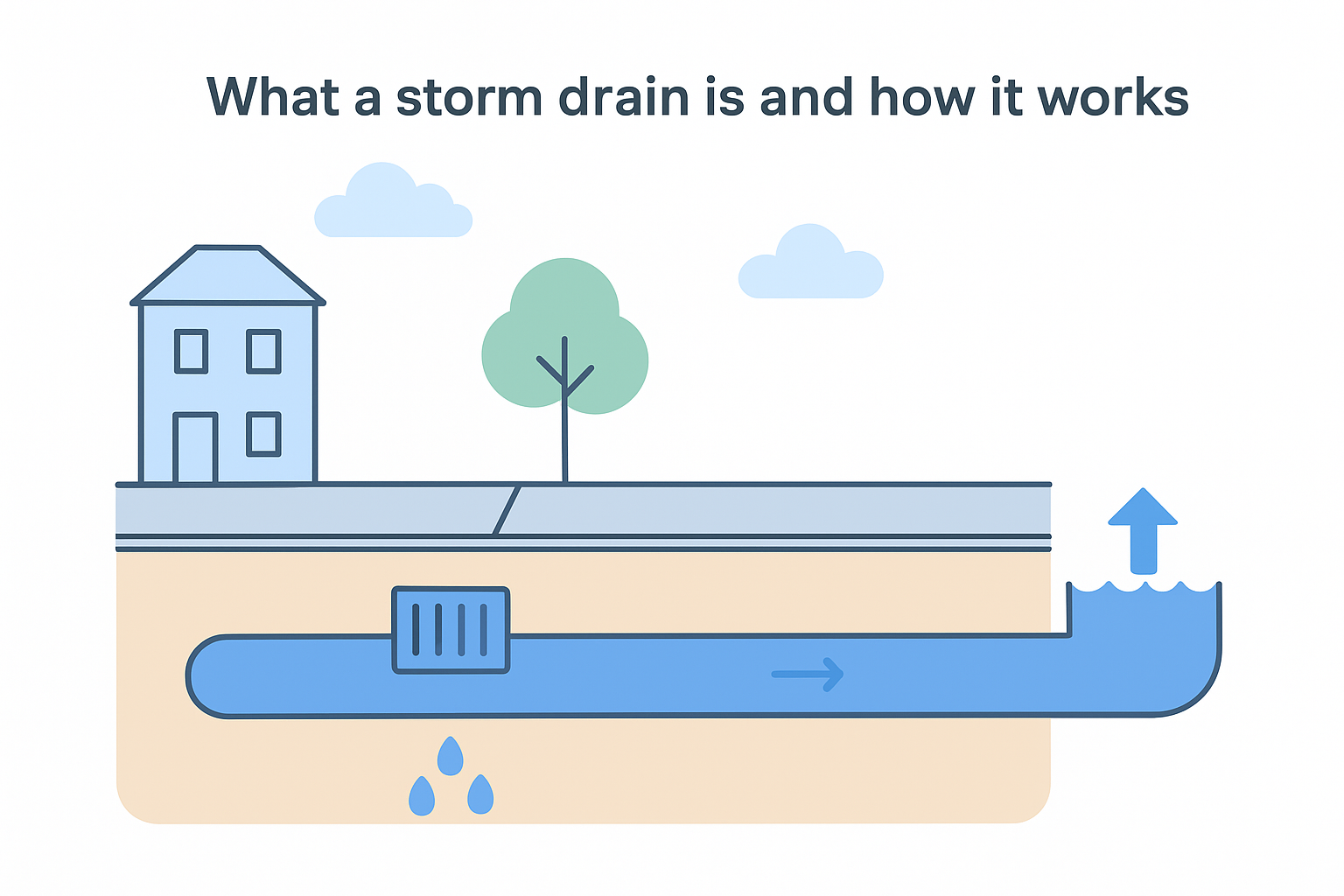
A storm drain is the underground pipe network that carries stormwater away from your property to a designated discharge point. These pipes form an extensive system beneath streets, parking lots, and commercial sites, transporting water from collection points to rivers, retention ponds, or municipal treatment facilities. You won’t see most of the storm drain infrastructure because it operates entirely below ground, moving water through gravity-fed channels that slope toward the final destination.
The underground network
Storm drain pipes range from small lateral lines that connect individual collection points to large trunk lines that handle water from entire neighborhoods or commercial districts. Your property’s storm drains tie into this larger municipal system through connection points regulated by local codes. The pipes themselves are typically concrete or corrugated metal, designed to withstand constant water flow and the weight of pavement above them.
Water flow and discharge points
Water enters storm drains through surface inlets and travels downhill through the pipe network until it reaches a discharge location. The system relies on proper slope and sizing to prevent backups during heavy rain events. When you understand the catch basin vs storm drain relationship, you realize that storm drains are the transport mechanism, while catch basins serve as the entry points that filter debris before water enters the pipes.
Storm drains don’t treat or filter water; they simply move it off your property as quickly as possible.
What a catch basin is and how it works
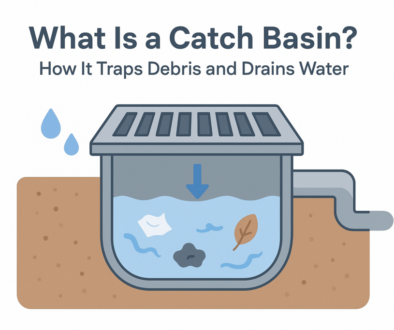
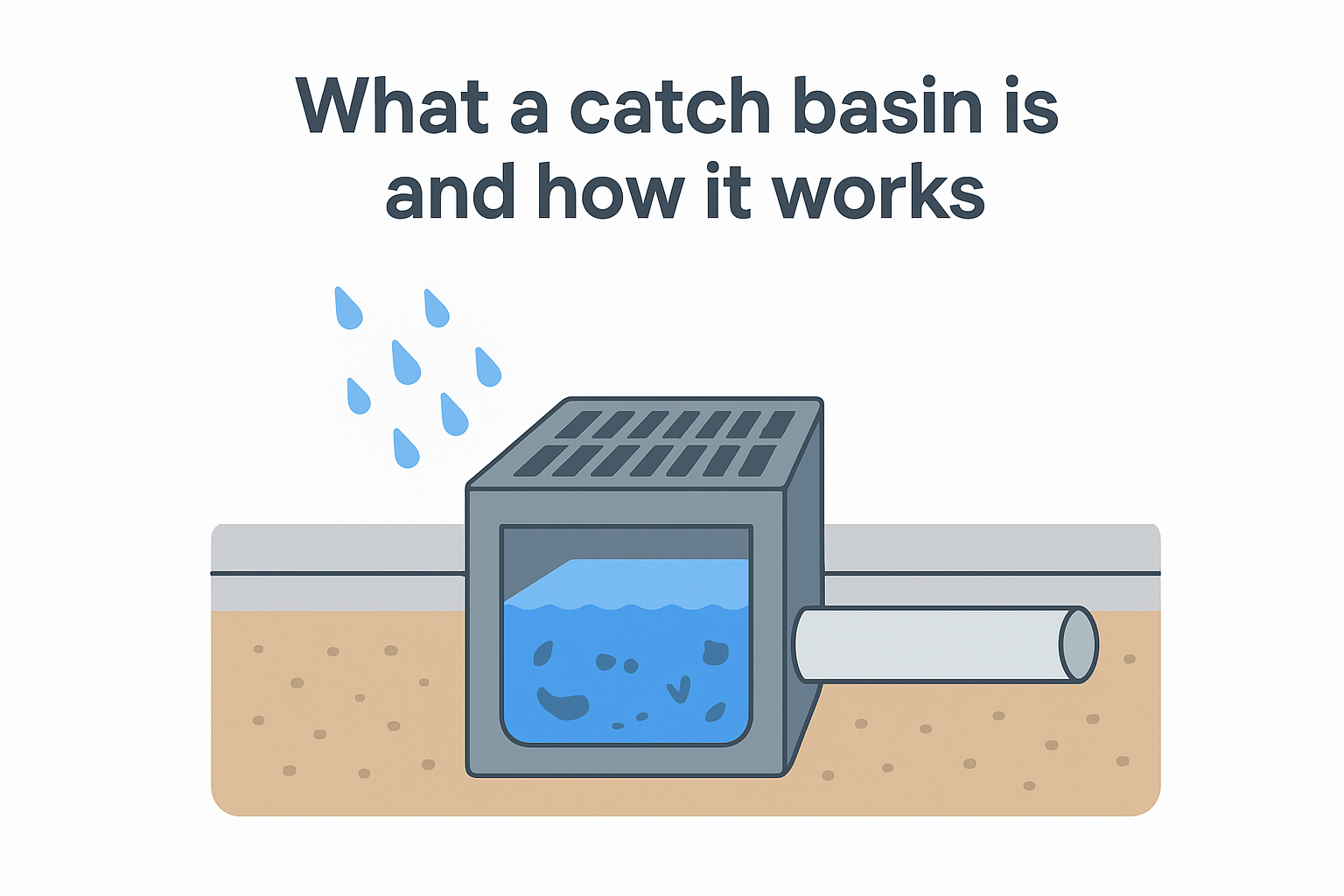
A catch basin is the visible surface structure that collects stormwater runoff before it enters your property’s underground drainage system. You’ll recognize these as the grated openings in parking lots, along curbs, and near building entrances that capture water from rainfall or snowmelt. Each catch basin connects directly to storm drain pipes below, but unlike a simple inlet, it includes a sump or sediment trap that captures debris before water flows into the pipes.
The filtering function
The catch basin’s sump sits below the outlet pipe, creating a retention chamber where sediment, leaves, trash, and other debris settle out of the water column. This design prevents pipe blockages downstream and reduces the amount of pollutants entering municipal water systems. When water enters the catch basin, heavier particles drop into the sump while cleaner water exits through the outlet pipe that connects to your storm drains.
Catch basins serve as your first line of defense against drainage system failures caused by debris accumulation.
Design and access points
Most catch basins feature a removable grate at street level that allows maintenance crews to access the sump for cleaning. The structure itself is typically concrete or precast material, with depths ranging from two to six feet depending on your property’s drainage requirements. Understanding the catch basin vs storm drain relationship means recognizing that catch basins require regular maintenance while storm drain pipes remain mostly self-sustaining once properly installed.
Catch basin vs storm drain: key differences
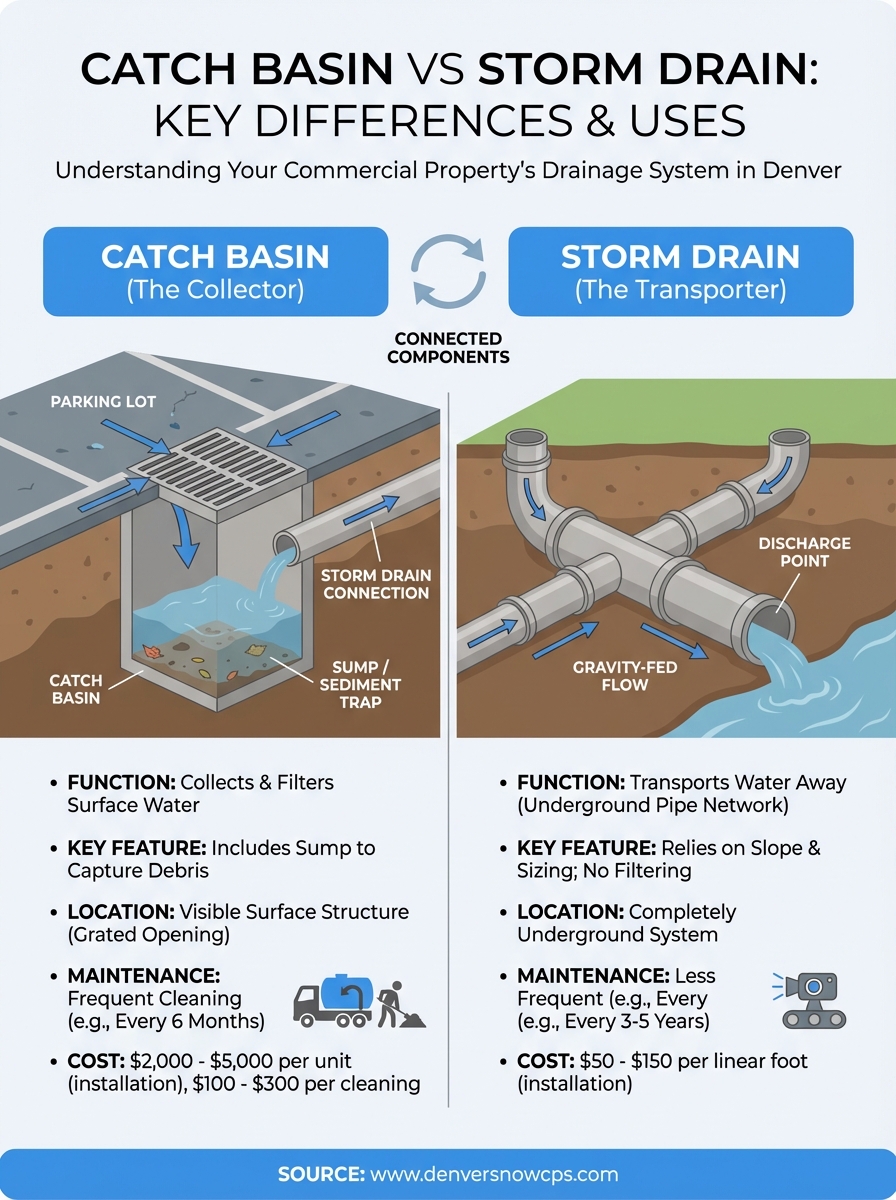
The catch basin vs storm drain distinction comes down to function and location within your drainage system. While these components work together to manage stormwater, they serve separate roles that property managers need to understand for effective maintenance planning. A catch basin collects and filters water at the surface level, while storm drains transport that water away through underground pipes.
Function and purpose
Catch basins act as collection and filtration points that capture debris before water enters your drainage network. They include a sump chamber that traps sediment, preventing pipe blockages downstream. Storm drains, by contrast, function purely as transport infrastructure that moves water from catch basins to discharge locations without any filtration capacity.
The catch basin protects your storm drains by removing debris before it can travel through the pipe network.
Location and visibility
You can see catch basins at ground level wherever water needs to drain from your property’s surface, marked by metal or concrete grates in parking lots and along curbs. Storm drains remain completely underground as a network of pipes that you never directly observe during normal operations. This visibility difference affects maintenance schedules, since you can inspect catch basins regularly but need specialized equipment to assess storm drain condition.
Uses, maintenance, and cost factors
Understanding the catch basin vs storm drain relationship becomes practical when you plan maintenance budgets and schedule preventive inspections for your commercial property. Catch basins require frequent cleaning to remove accumulated debris from their sumps, typically every six months in high-traffic areas or after major storms. Your maintenance team can handle basic catch basin cleaning with vacuum trucks or manual removal, while storm drain repairs usually require specialized contractors with camera inspection equipment and pipe rehabilitation tools.
Maintenance schedules and requirements
Catch basins need annual or semi-annual cleaning depending on your property’s tree coverage and parking lot activity. You’ll pay between $100 and $300 per catch basin for professional cleaning services that remove sediment, leaves, and trash from the sump chamber. Storm drains typically need inspection every three to five years unless you experience recurring backups or notice slow drainage patterns.
Regular catch basin maintenance costs far less than emergency storm drain repairs after a system failure.
Cost considerations
Installing a new catch basin runs $2,000 to $5,000 per unit, including excavation, the structure itself, and connection to existing storm drains. Storm drain pipe installation costs $50 to $150 per linear foot depending on pipe diameter and site conditions. Your total drainage system investment depends on property size and local code requirements for stormwater management capacity.
Next steps for your site
Understanding the catch basin vs storm drain relationship gives you the framework to protect your commercial property from water damage and liability risks. Your next step is scheduling a drainage system inspection to identify existing problems before they escalate into expensive repairs or safety hazards. Walk your property after the next significant storm to spot areas where water pools or drains slowly, marking those locations for professional assessment.
Property managers who implement preventive maintenance schedules for catch basin cleaning and storm drain inspection save thousands of dollars compared to reactive repairs after system failures. Document your drainage infrastructure on a property map, noting the location of each catch basin and the general layout of storm drain connections. This information becomes invaluable when planning maintenance or responding to flooding emergencies.
Denver Snow & Commercial Property Services handles drainage system inspection, catch basin cleaning, and maintenance planning for commercial properties throughout the Denver metro area. Contact us for a drainage assessment that identifies your property’s specific needs and helps you avoid costly water damage.